Should I Choose Aluminium, Timber or uPVC?

Product Comparisons · Flagship guide

Should I Choose Aluminium, Timber or uPVC?

Choose by building, not by material. Aluminium suits large openings and slim sightlines, timber suits period and high-end joinery contexts, and modern uPVC suits ordinary openings where value matters.

3 min read

Written by Windows in the Lakes · A trading name of Home Glazing Ltd · Last reviewed 21 September 2026

Short answer

In short: aluminium is the right answer where openings are large, sightlines should be slim and the finish must last on an exposed elevation. Timber — including aluminium-clad timber — is the right answer where the building wants depth, warmth and traditional profiles. Modern uPVC is the right answer where openings are modest, the frame is barely seen and the budget is better spent elsewhere.

We install all three families, which is why this guide is not written to push one of them. The most expensive mistake in glazing is a material chosen before the building has been looked at.

The three materials side by side

AluminiumTimber / alucladuPVC
SightlinesSlimmest of the threeDeeper, with traditional profiles availableWidest, though flush systems have improved
Large openingsStrongest — the natural choiceGood, especially in alucladLimited; needs reinforcing and heavier frames
MaintenanceWash downAluclad washes down; exposed timber needs a finishing cycleWash down
Thermal performanceGood with a well-engineered thermal breakBest in class in timber and alucladGood
Heritage suitabilityDepends on the profile; heritage ranges existUsually the easiest to get approvedCase by case, and often resisted in sensitive contexts
Appearance indoorsEngineered and minimalWarm and tactileFunctional
Relative costHigherHigher, and highest in aluclad tripleLower
General characteristics — individual systems vary considerably within each material

Which building points to which material

  1. 01Contemporary extension or new buildAluminium, almost always. Large panes, slim frames and a consistent family of windows, doors and sliding doors in one colour.
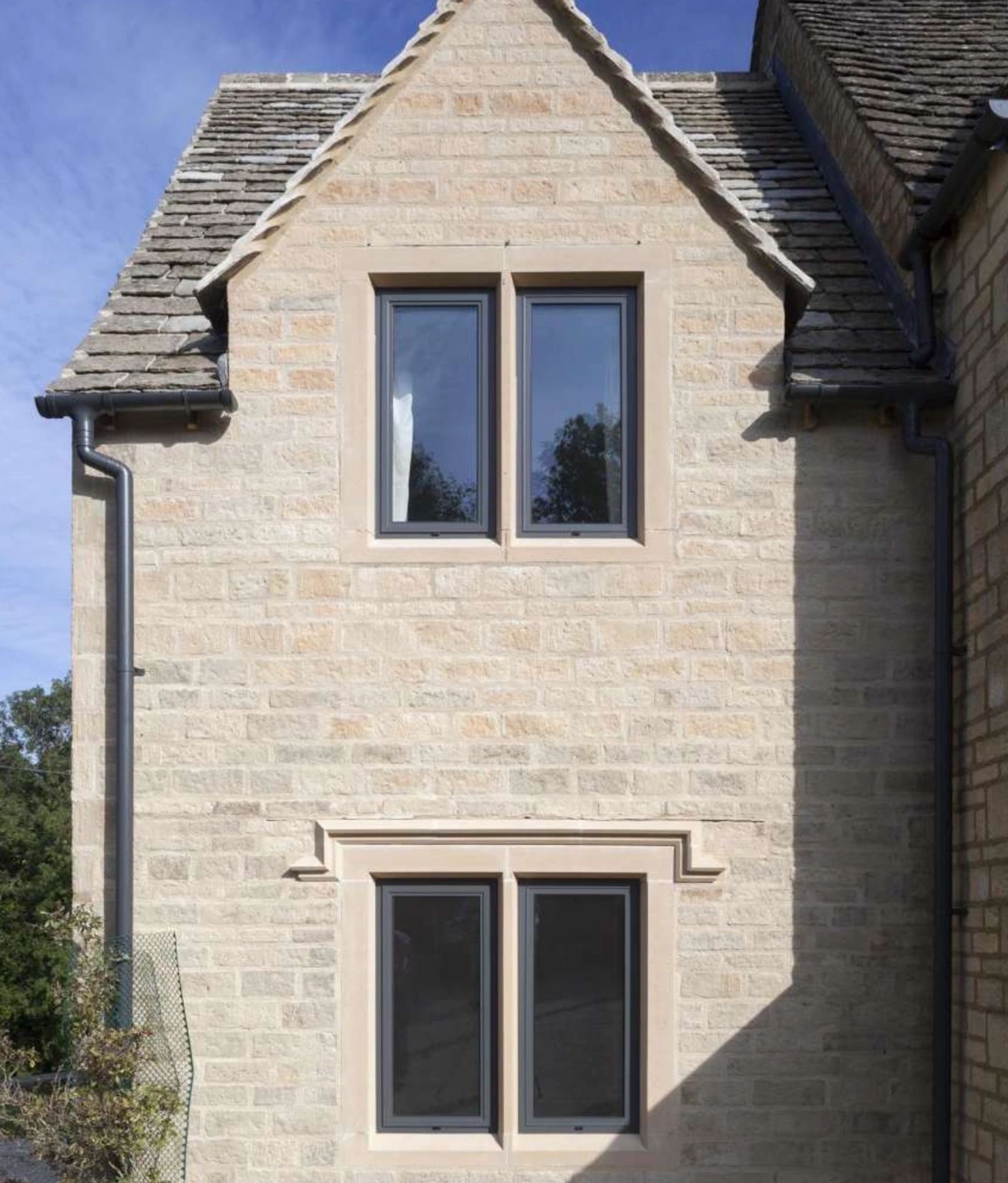
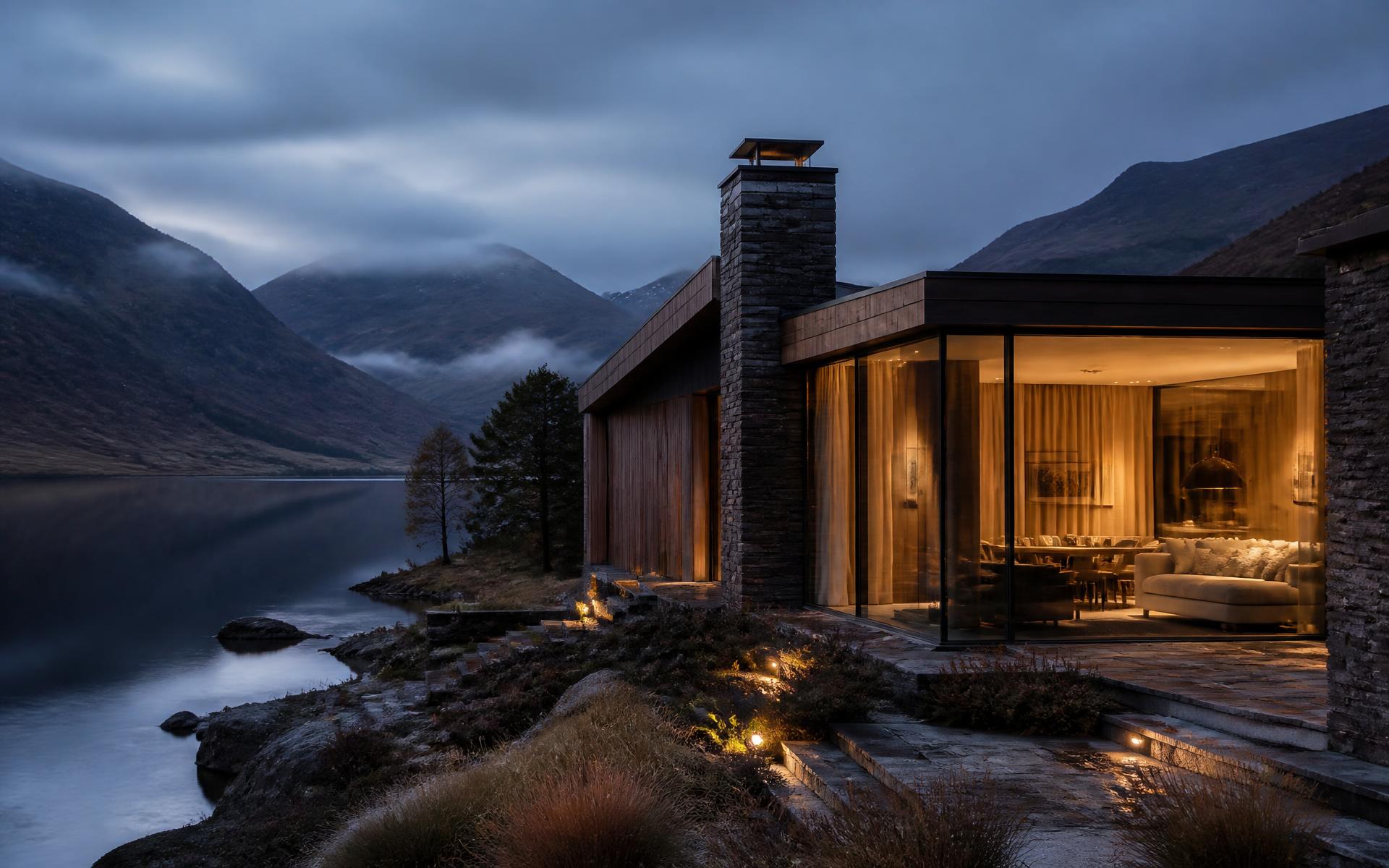
  2. 02Stone farmhouse or cottageTimber, aluclad or a well-chosen flush system. The frame depth and the way the window sits in a thick reveal matter more than the material name.
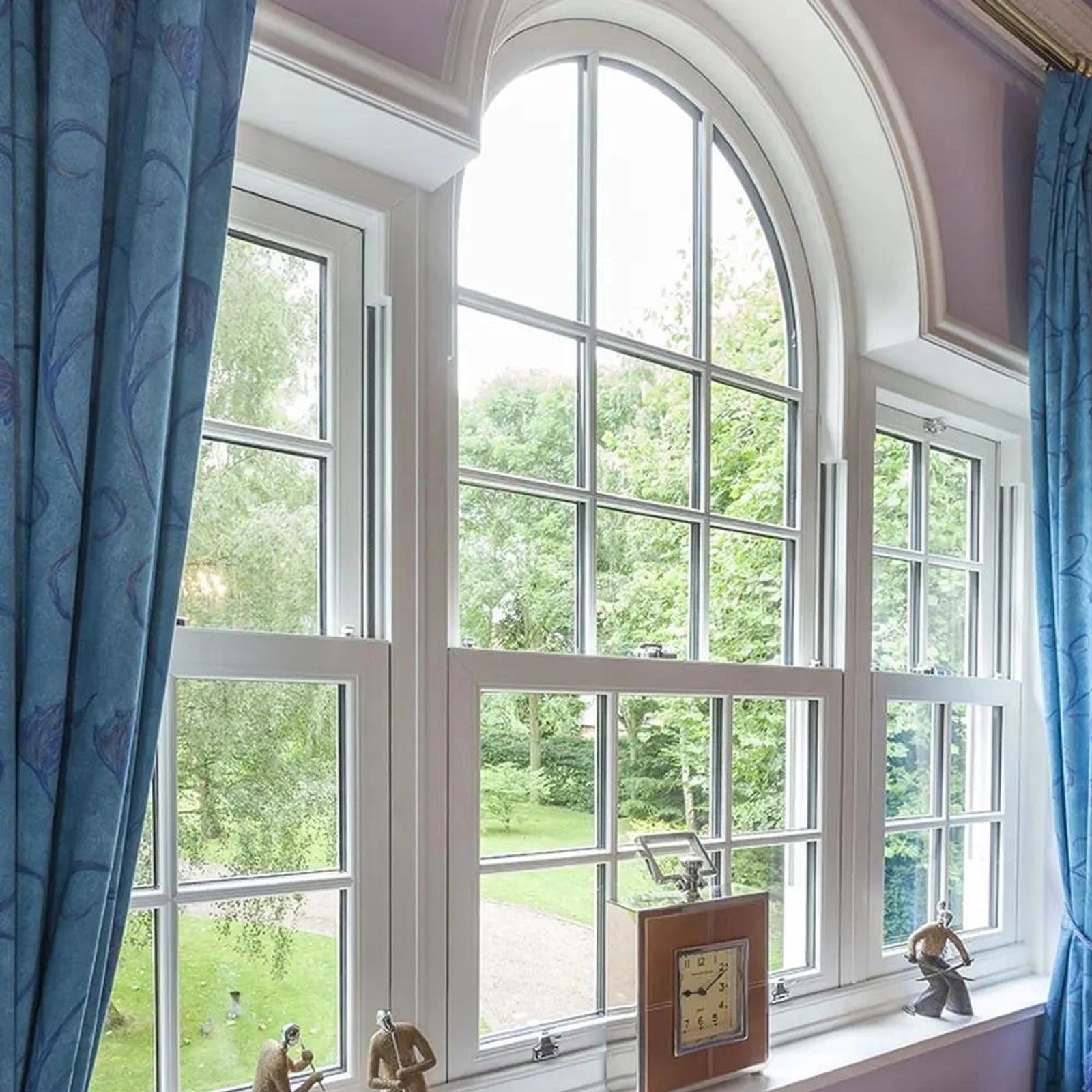
  3. 03Victorian or Georgian townhouseHeritage profiles, correct proportion and often a vertical sliding sash. Material follows the profile, not the other way round.
  4. 04Barn conversionAluminium for the large agricultural openings; the dark frame and minimal sightline suit the character.
  5. 05Exposed rural or coastal siteAluminium or aluclad, with attention to coating specification, because the finish is doing most of the work.
  6. 06Whole-house replacement on an ordinary estate houseModern uPVC or timber-look uPVC is often the sensible answer, with the budget concentrated on doors and the rear elevation.

The three mistakes we see most

  • Choosing aluminium for a building whose openings are too small to show any benefit from the slim frame.
  • Choosing uPVC for a wide, unsupported opening and then being surprised by the frame depth needed to make it work.
  • Choosing exposed timber on an exposed elevation without accepting the maintenance cycle that comes with it.

Terms used in this guide

Sightline
The visible width of frame seen across a window or door — outer frame, meeting stile and any glazing bar. Slimmer sightlines mean more glass and more daylight for the same opening.
Thermal break
An insulating barrier inside an aluminium frame separating the inner and outer faces of metal, so heat is not conducted straight through the frame.
U-value
The rate at which heat passes through a building element, in W/m²K. A lower number means less heat loss. Window U-values may be quoted for the glass alone or for the whole window; the whole-window figure is the comparable one.

Sources and further reading

Regulatory and technical points in this guide should be checked against the current published guidance below, and against the specific circumstances of your property.

Guidance last reviewed 21 September 2026 by Windows in the Lakes

Next step

Considering aluminium windows for your own project?

We design, specify and install across Cumbria, the Lake District and the wider North. Send drawings, photographs or simply a description of the building and we will tell you what is possible and what it should cost.

Explore from here

Everything this guide touches

Save anything you are drawn to. It gathers in My Inspiration and travels with your enquiry as a design brief.

Questions

About this subject

If your question isn’t here, we would rather talk it through properly than guess.

Book a Design ConsultationVisit the Knowledge Centre

Keep reading

Related guides

Aluminium vs uPVC Windows

Flagship guide · 8 min read

Aluminium vs uPVC Windows

Aluminium and modern timber-look uPVC are both good materials. The right choice depends on the age and style of your house, your budget, and how the frames will be used, not on which one is fashionable.
Aluminium vs Timber-Look Windows

Product Comparisons · 4 min read

Aluminium vs Timber-Look Windows

Choose aluminium for the slimmest sightlines and largest panes; choose timber-look uPVC such as the Residence Collection for the most convincing painted-timber appearance at a lower cost.

Are Aluminium Windows Worth It for a Normal House?

Product Comparisons · 3 min read

Are Aluminium Windows Worth It for a Normal House?

Often not — and we will tell you when. Aluminium earns its premium on large openings, slim sightlines and exposed finishes, not on a row of standard casements.

Found this guide helpful?

Build your own collection of expert advice as you plan your project.

Wondering how this applies to your own home?

Share a photograph and we’ll turn this guidance into recommendations for your property.

Discover Your Home

Ready to understand the likely investment?

Start your personalised Project Investment Guide and see comparable completed projects.

Plan Your Project Investment

Begin

Let’s design something exceptional.

Bring us your drawings, your site photographs or simply an idea. We will tell you what is possible, what it should cost and how long it will take.