When Aluminium Windows Are Not the Right Choice

Product Comparisons

When Aluminium Windows Are Not the Right Choice

Aluminium is exceptionally capable, but material capability is not the same as suitability for every building.

5 min read

Written by Windows in the Lakes · A trading name of Home Glazing Ltd

Aluminium windows may not be the right choice where listed-building consent requires authentic traditional joinery, where a softer timber appearance is central to the design, or where the project is a straightforward and highly budget-sensitive replacement. Timber Look, real timber, aluclad or standard uPVC can be more appropriate. Aluminium is strongest where slim sightlines, large openings, dimensional stability and a precise architectural finish justify its specification.

Saying no to aluminium in the wrong setting is part of specifying it well in the right one.

Highly traditional listed buildings may require real timber

Listed building consent is concerned with the special character of the building, not simply thermal performance. On some listed properties, a planning authority or conservation officer may expect repair of existing joinery or replacement in accurately detailed timber. A slim aluminium product is not automatically acceptable because it resembles an older metal frame.

Do not order on the assumption that replacement is permitted. Planning permission, listed building consent, Article 4 controls and Building Regulations are distinct. Check the relevant planning authority's requirements and obtain the necessary decision before manufacture.

Another material may give the more appropriate visual result

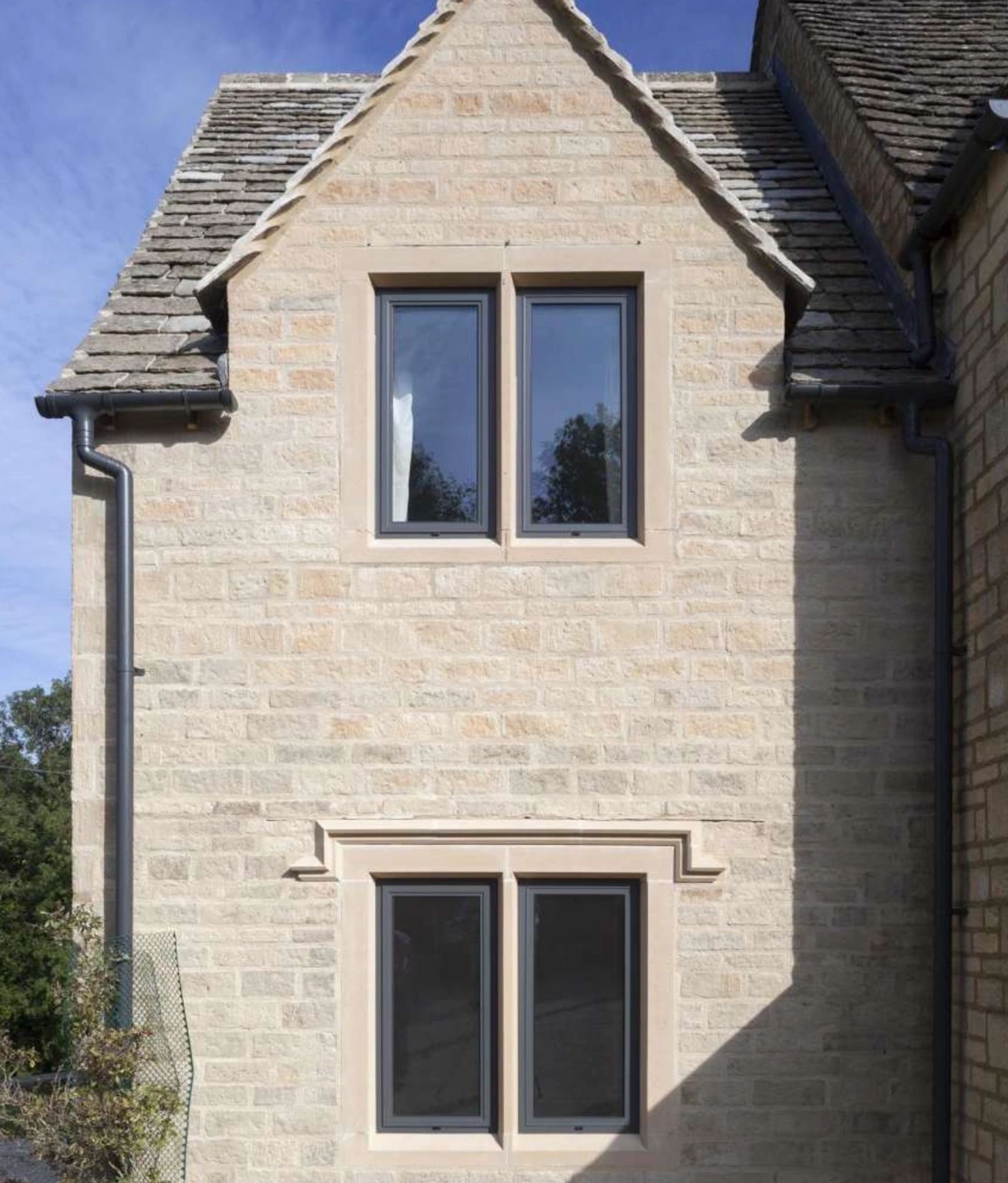
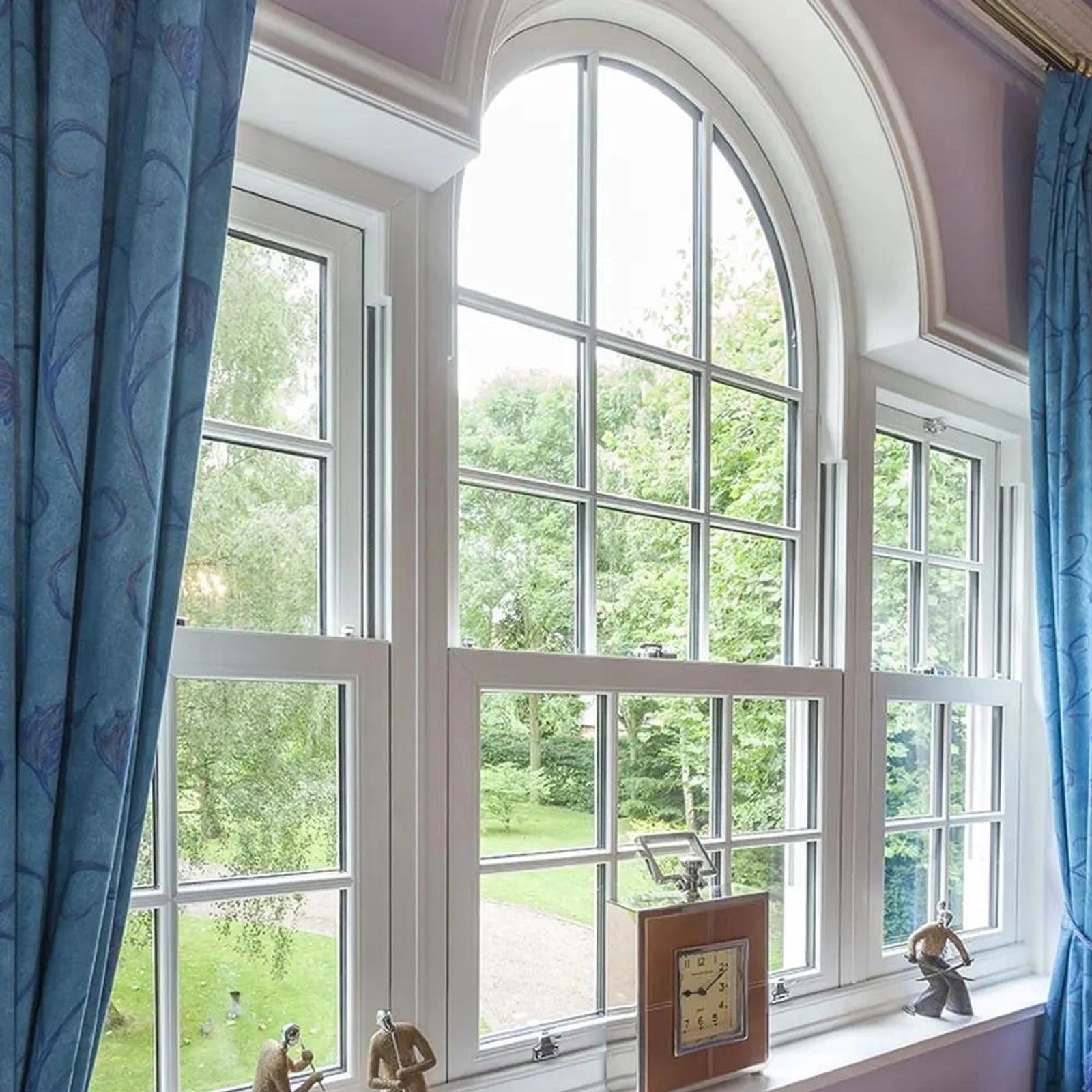
Aluminium has crisp joints, consistent surfaces and relatively slim profiles. Those qualities suit contemporary work, but they can feel too precise on a cottage elevation where deep reveals, traditional frame depth, moulded details or a warmer internal surface are important. Timber Look can provide period character with low maintenance; real timber can provide authentic joinery; aluclad can give timber internally and a weather-resistant aluminium exterior.

Very price-sensitive standard replacement work

For conventional openings where the priority is a sound, straightforward replacement at the lowest suitable cost, standard uPVC may meet the brief without the premium attached to aluminium profiles, fabrication and finish. Paying for slim sightlines or large-span capability brings little value if the opening and design do not use them.

Aluminium compared with the realistic alternatives

ChoiceWhere it often has the advantageWhere it may concede
AluminiumLarge openings, slim sightlines, crisp finish and design-led glazingTraditional texture, authentic joinery and lowest purchase price
Timber LookPeriod-style appearance, rural homes and low-maintenance replacementMaximum glass size and the very slimmest architectural profiles
Real timberListed or highly sensitive buildings and authentic moulded detailMaintenance commitment and dimensional consistency
Standard uPVCCost-conscious mainstream replacementsSightline refinement, large openings and bespoke architectural character

Aluminium vs Timber Look

Choose between them by elevation and opening, not by a blanket material preference. Aluminium may suit a new glazed extension at the rear while Timber Look better respects traditional openings at the front. On a rural stone property, flush Timber Look frames can reduce visual contrast; on a broad sliding opening, aluminium's structural efficiency and slim meeting stiles may be decisive.

Aluminium vs real timber

Real timber offers tactile warmth, repairability and authentic joinery detail. Aluminium offers a stable, precise finish with modest routine maintenance. Listed status or a conservation-led brief may make timber the correct answer; a contemporary self-build with large glass may make aluminium the clearer fit. Neither conclusion should be reached from maintenance claims alone.

Aluminium vs standard uPVC

Standard uPVC is often the rational choice for uncomplicated replacement openings where budget and familiar operation lead the brief. Aluminium earns its place where proportions, finish, opening size or integration with sliding and bifolding doors matter. Compare whole-window performance and the actual system rather than assuming one material always insulates better.

Where aluminium performs particularly well

  • Large windows and broad glazed openings
  • Contemporary extensions and architectural glazing
  • Self-builds where openings can be coordinated early
  • Modern renovations with a consistent frame language
  • Slim sightlines and large glazed areas
  • Design-led homes using precise colours and details
  • Exposed locations when system, drainage, glass and installation are properly specified

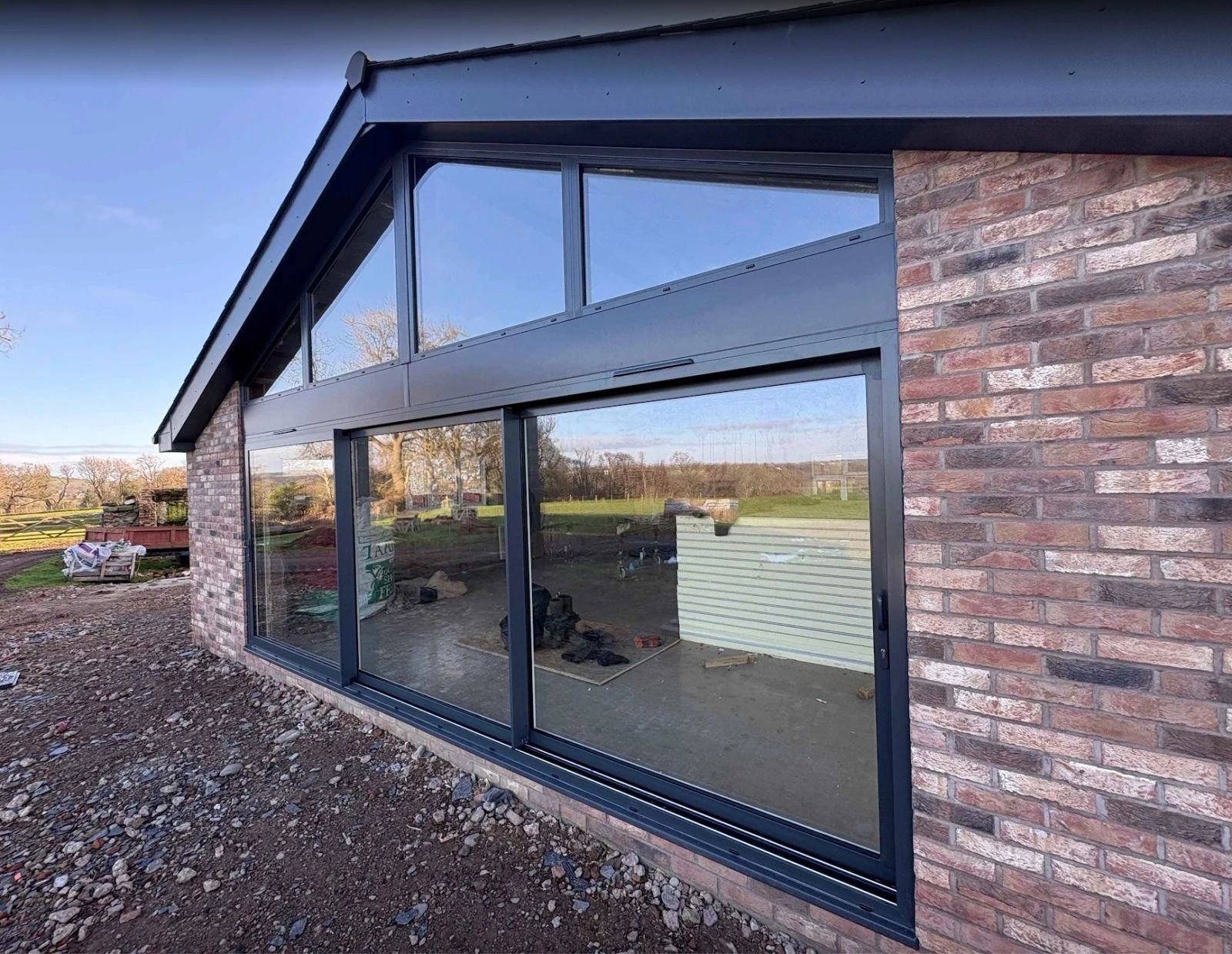
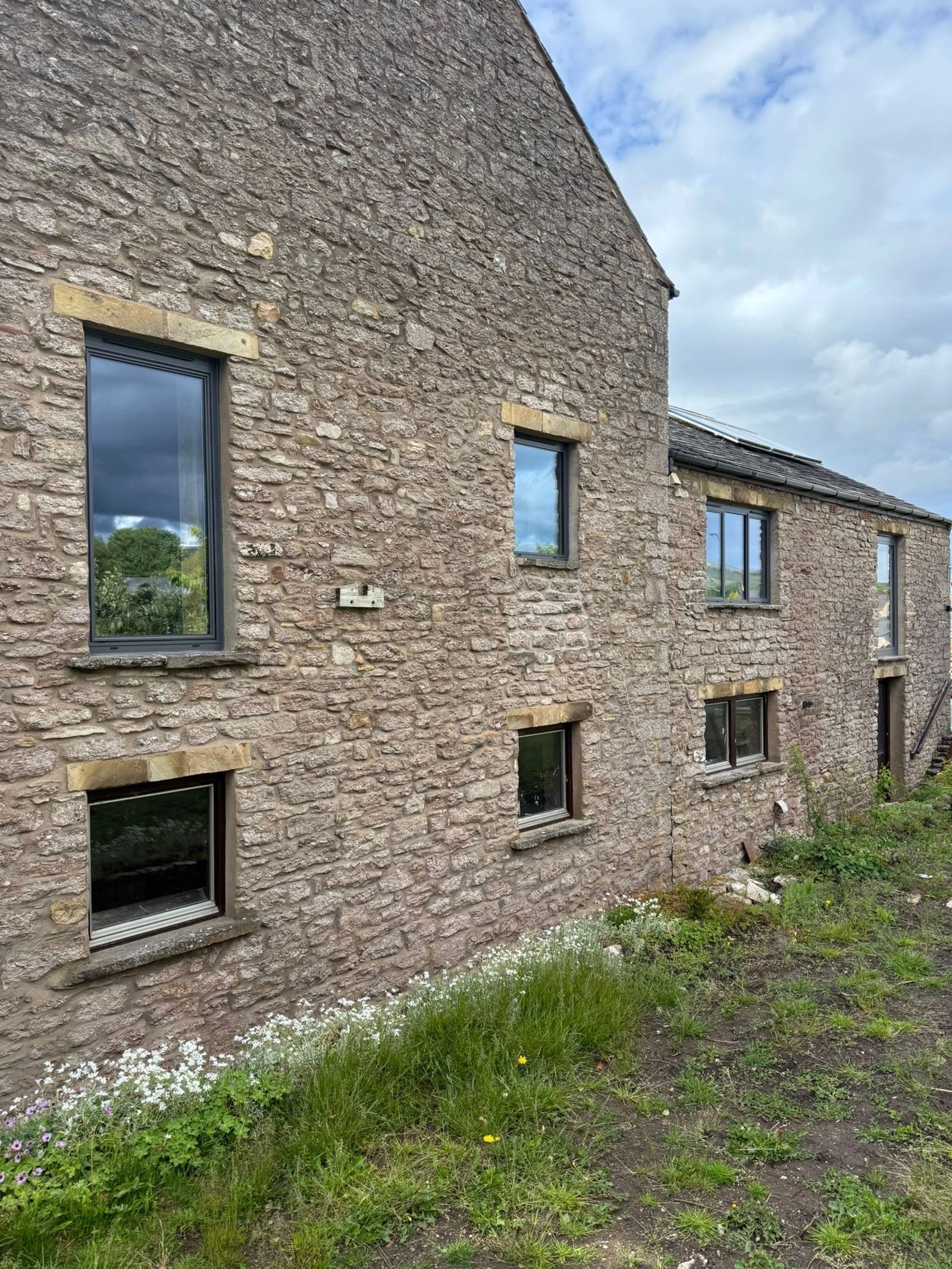
The 5.6-metre sliding opening in a barn conversion near Brampton is a genuine example of aluminium being used for a span and visual result that justified it. The full-house Heritage installation near Kirkby Stephen shows a different application: aluminium detailed into irregular stone openings. These are relevant examples, not proof that aluminium belongs on every rural property.

Make the decision opening by opening

Mixed material choices can be coherent when the reasons are clear. Review principal elevations, internal finish, opening size, consent, exposure, maintenance expectations and budget. Then ask a supplier to explain both the benefits and compromises of its recommendation. A recommendation that acknowledges the strongest alternative is usually more useful than one that presents a single material as universal.

Conservation suitability depends on detail, not a material label

Within a conservation area, replacement windows are not automatically prohibited and aluminium is not automatically acceptable. The effect on the elevation, the existing window, permitted development rights and any Article 4 Direction all matter. Listed buildings are a separate consent regime. A pre-application conversation or formal application may require elevations, sections, colour samples and glazing-bar details.

Timber Look can be convincing on many unlisted traditional homes, but applied details or frame proportions may still be wrong for a sensitive principal elevation. Real timber can be the strongest answer where joinery profiles and repairability carry historic significance. The relevant planning authority, not the supplier, decides consent.

Comfort and performance should be assessed as a complete window

Material comparisons often collapse into one thermal number. In practice, frame design, glass area, spacer, installation, airtightness, solar gain and ventilation all influence comfort. Aluminium systems use thermal breaks; uPVC and timber have different conductive characteristics. Compare the declared performance of the proposed whole window or door, in its actual size and configuration where available.

For broad south- or west-facing glass, overheating and glare may matter more than a small frame-value difference. For a noisy elevation, acoustic glass and perimeter sealing may dominate. For an exposed opening, water management and installation detail may be decisive. Choosing another material without resolving those factors is not automatically an improvement.

Maintenance expectations can change the answer

Powder-coated aluminium generally asks for routine cleaning and care of moving parts, but coastal or exposed conditions can require more frequent cleaning. Timber needs a finish and maintenance cycle appropriate to its exposure. uPVC and Timber Look reduce repainting but still need cleaning, drainage checks and hardware care. Ask for written maintenance information before treating any material as maintenance-free.

From a real Windows in the Lakes project

Brampton, Carlisle · 5600mm × 2100mm AS-20 slider · 6 windows

Slimline Sliding Doors, Barn Conversion near Brampton

The rural location brought access challenges typical of farm conversions — restricted access and limited working space for deliveries and installation — alongside the irregular geometry of the original structure.

We coordinated closely with the wider build team on scheduling to minimise disruption, and carried out a full professional survey with every opening measured and checked in detail before manufacture. Installation focused on structural interfaces, weather tightness and clean internal and external detailing.

Read the project story

Next step

Considering aluminium windows for your own project?

We design, specify and install across Cumbria, the Lake District and the wider North. Send drawings, photographs or simply a description of the building and we will tell you what is possible and what it should cost.

Explore from here

Everything this guide touches

Save anything you are drawn to. It gathers in My Inspiration and travels with your enquiry as a design brief.

Questions

About this subject

If your question isn’t here, we would rather talk it through properly than guess.

Book a Design ConsultationVisit the Knowledge Centre

Keep reading

Related guides

Aluminium vs Timber-Look Windows

Product Comparisons · 4 min read

Aluminium vs Timber-Look Windows

Choose aluminium for the slimmest sightlines and largest panes; choose timber-look uPVC such as the Residence Collection for the most convincing painted-timber appearance at a lower cost.

Aluminium vs uPVC Windows

Flagship guide · 8 min read

Aluminium vs uPVC Windows

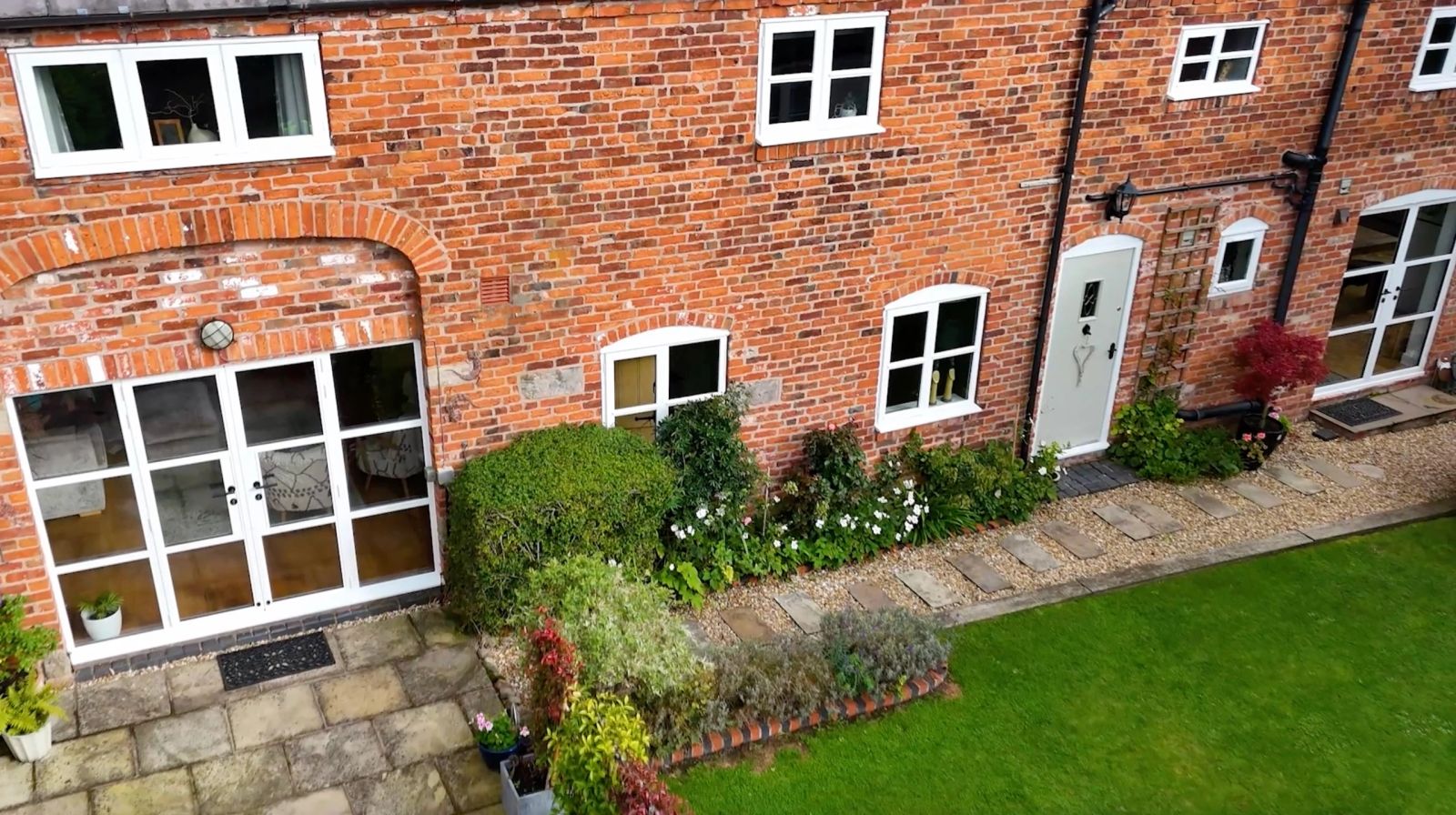
Aluminium and modern timber-look uPVC are both good materials. The right choice depends on the age and style of your house, your budget, and how the frames will be used, not on which one is fashionable.

Windows and Doors for Listed Buildings

Planning & Regulations · 3 min read

Windows and Doors for Listed Buildings

Listed status makes consent a legal requirement for almost any change, but it also opens the door to some excellent heritage-specification alternatives.

Choosing Windows for a Lake District Property

Flagship guide · 8 min read

Choosing Windows for a Lake District Property

Lake District houses ask more of their glazing than most. This is how we specify windows and doors for stone cottages, farmhouses, renovations, extensions and contemporary homes across Cumbria.

Found this guide helpful?

Build your own collection of expert advice as you plan your project.

Wondering how this applies to your own home?

Share a photograph and we’ll turn this guidance into recommendations for your property.

Discover Your Home

Ready to understand the likely investment?

Start your personalised Project Investment Guide and see comparable completed projects.

Plan Your Project Investment

Begin

Let’s design something exceptional.

Bring us your drawings, your site photographs or simply an idea. We will tell you what is possible, what it should cost and how long it will take.