
Aluminium vs uPVC Windows

Product Comparisons · Flagship guide

Aluminium vs uPVC Windows

Aluminium and modern timber-look uPVC are both good materials. The right choice depends on the age and style of your house, your budget, and how the frames will be used, not on which one is fashionable.

7 min read

We are asked to compare aluminium and uPVC windows on most enquiries that come through the door, and it is usually the first genuine decision a homeowner has to make before anything else is specified. Both materials, used properly, will give you a warm, weathertight, long-lasting window. The differences that matter are sightlines, cost, colour options, and how each performs on a large or exposed elevation.

This guide sets out the real differences rather than the marketing lines you will find elsewhere. We sell both aluminium and the Residence Collection of timber-look uPVC, so we have no reason to push you towards the more expensive option if it is not the right one for your project. In parts of Cumbria facing westerly weather off the fells, or on a Victorian terrace in a conservation area, the correct answer to this question is not the same.

By the end of this guide you should know which material suits your elevation, your budget and your house style, and where each one falls down.

The short answer

Where people go wrong is assuming one material is universally superior. Aluminium is not automatically "better" than uPVC; it is a different set of trade-offs, at a different price point, suited to different buildings.

Material and construction

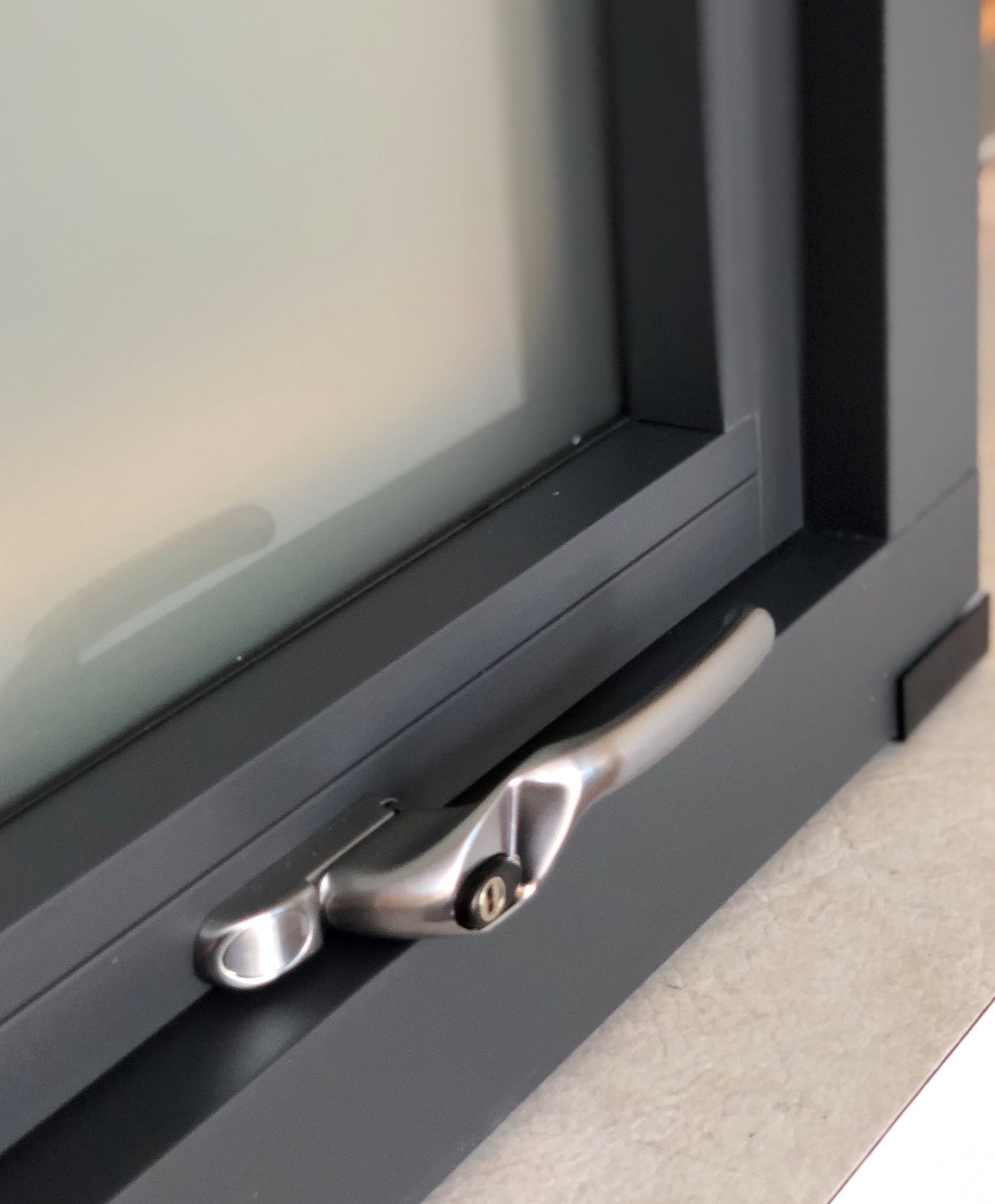
Aluminium windows use a powder-coated extruded aluminium frame with a thermal break, a strip of insulating polyamide bonded between the inner and outer sections of the extrusion, that stops heat conducting straight through the metal. This construction is what allows a slim, strong frame while still meeting current thermal regulations.

uPVC windows are built from multi-chambered PVC-U profile. Modern Residence Collection systems bond a foil finish over the profile to replicate painted timber, and use flush sculpted horns and a wider sightline than aluminium to achieve strength without steel reinforcement in most cases (heavier openers still take internal steel).

AluminiumuPVC (Residence Collection)
Frame materialExtruded aluminium, thermally brokenMulti-chambered PVC-U, foil-finished
Typical sightlineSlim, around 40-70mm visible faceWider, around 70-120mm visible face
ReinforcementRarely needed, aluminium is inherently rigidSteel reinforcement in larger openers
Structural spansGood for large single panes and tall openingsBetter suited to smaller domestic openings
Construction at a glance

Appearance and sightlines

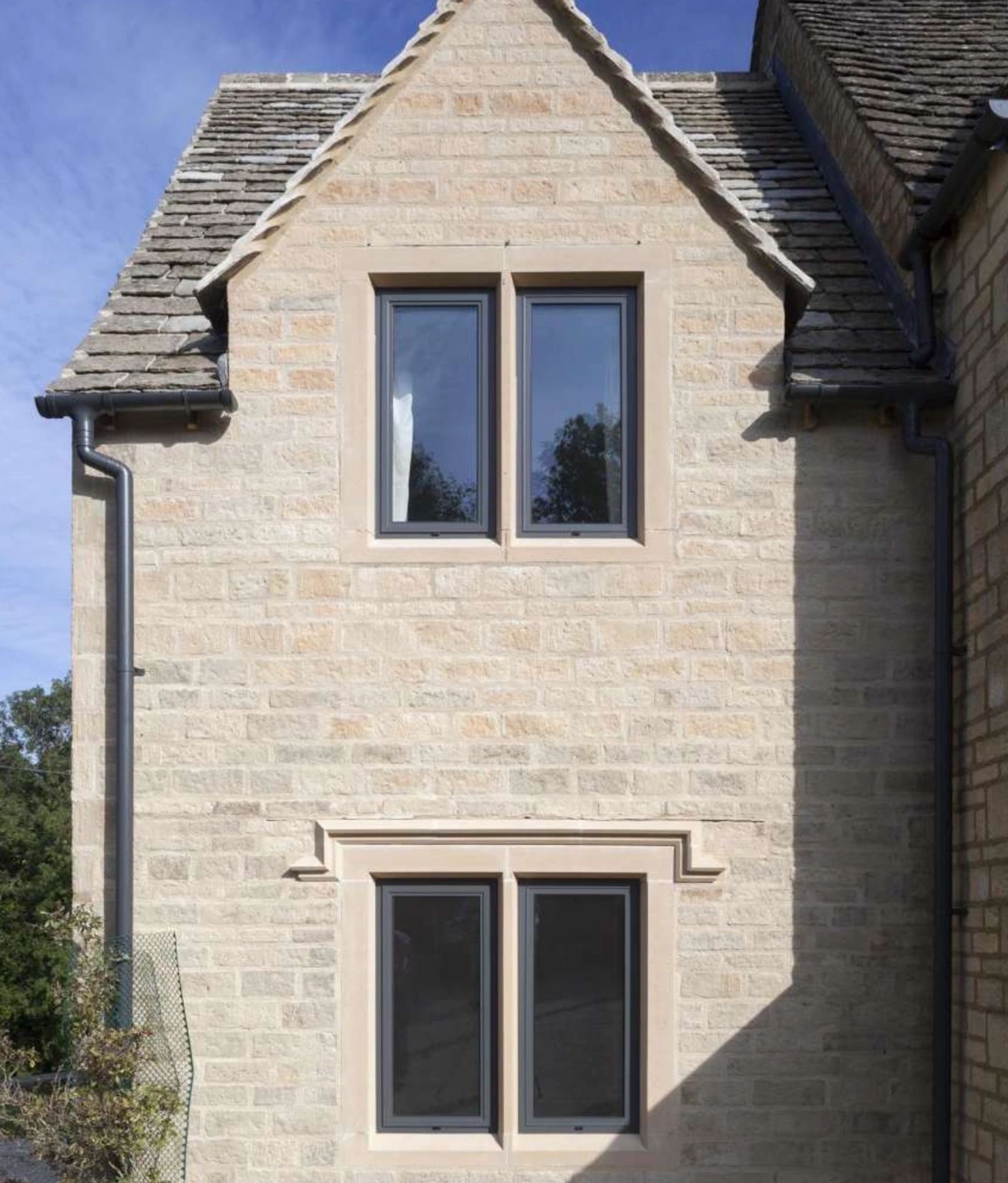
This is usually the deciding factor once cost has been discussed. Aluminium's strength allows narrower frames and larger glass areas for the same opening, which reads as a cleaner, more architectural look. It suits contemporary extensions, barn conversions and new builds where large panes and flush glazing are part of the design.

The Residence Collection was developed specifically to answer the opposite brief: a genuinely convincing timber look, complete with sculpted horns, ovolo details and deep woodgrain foils, for houses where a flat aluminium frame would look wrong. On a stone Lakeland cottage or a Victorian terrace, a well-specified R9 window in wood-grain white or cream can be difficult to distinguish from painted timber at ten paces.

  • Choose aluminium if the brief is large glass, minimal frame, and a flat, modern colour like Anthracite Grey or Jet Black.
  • Choose uPVC if the brief is a traditional sash or casement look, woodgrain finish, or you are matching neighbouring timber windows.
  • Both are available in the same RAL colour ranges, so colour alone is rarely the deciding factor.

Thermal and weather performance

Both materials can comfortably meet the Part L requirement of 1.4 W/m²K whole-window U-value for replacement windows. In practice, modern aluminium systems achieve around 1.2-1.4 W/m²K double glazed and 0.9-1.1 W/m²K triple glazed, and the Residence Collection sits in a very similar 1.2-1.4 W/m²K double, around 0.9 W/m²K triple. Neither material has a meaningful thermal advantage once glazed to a comparable specification; the glass and spacer bar do most of the thermal work.

Where aluminium has a genuine edge is on exposed, weather-beaten elevations. It does not expand and contract with temperature to the same degree as uPVC, holds its shape over very long spans, and its powder coat does not fade or chalk in the way some cheaper uPVC foils can after many years of strong western sun and driving rain.

Aluminium U-value (double)
1.2-1.4 W/m²K
Aluminium U-value (triple)
0.9-1.1 W/m²K
Residence U-value (double)
1.2-1.4 W/m²K
Residence U-value (triple)
around 0.9 W/m²K
Part L minimum
1.4 W/m²K whole-window

Cost

This is where the two materials separate clearly. A Residence Collection uPVC window supplied and installed typically runs £950-£1,700 depending on size, opening style and glazing. Aluminium casement windows typically run £1,400-£2,600 per window for the same job. Across a whole house that difference adds up quickly: on a fifteen-window project the gap between the two materials can be £7,000-£13,500.

MaterialPer window (guide price)15-window house (guide price)
uPVC (Residence Collection)£950 - £1,700£14,250 - £25,500
Aluminium£1,400 - £2,600£21,000 - £39,000
Indicative supplied-and-installed cost

Lifespan and maintenance

Both materials are low maintenance compared with timber, needing no repainting. Aluminium's powder coating typically carries a longer guaranteed life against fading and generally continues performing well past 35-40 years, with the frame itself effectively lasting the life of the building. uPVC frames are generally guaranteed for around 10 years on the profile and typically perform well for 25-35 years before hardware wear or foil degradation makes replacement worthwhile.

In practice, hardware, hinges and seals are usually what fail first on either material, and both are readily serviceable. Neither needs sanding, painting or the ongoing care that timber demands.

Where each one is the wrong choice

Being blunt about the weaknesses is more useful than another list of benefits.

  • Aluminium is the wrong choice if budget is tight and you need to replace every window in the house in one go: the price premium can push a whole-house project out of reach for no real performance gain on a standard semi-detached elevation.
  • Aluminium on a small period cottage with fussy glazing bar patterns can look thin and slightly clinical if the wrong profile is chosen, undermining the character the house should keep.
  • uPVC is the wrong choice on very large openings, wide sliding doors or where you want minimal visible frame: it simply cannot match aluminium's structural spans or sightlines.
  • Cheaper uPVC foils on strongly south or west-facing elevations in exposed locations can, over many years, show colour change before an equivalent powder-coated aluminium frame would.

Which should you choose

If your house is a cottage, terrace or traditional semi and you want the maximum number of windows replaced within a set budget, the Residence Collection is very likely the right call, and there is no meaningful performance penalty for choosing it.

If you are extending, building new, or replacing large openings and want the frame to disappear as much as possible, aluminium earns its higher price. It is also the more sensible long-term choice on very exposed elevations where you plan to stay in the house for decades.

Many of our Cumbrian projects use both: aluminium on a rear extension's large glazing, and Residence Collection uPVC on the original part of the house where sightlines matter less and budget needs to stretch further. That mixed approach is common and nothing to be embarrassed about.

Explore from here

Everything this guide touches

Save anything you are drawn to. It gathers in My Inspiration and travels with your enquiry as a design brief.

Relevant colours

Colours Studio
Anthracite Grey · RAL 7016Jet Black · RAL 9005Golden OakHeritage Cream

Questions

About this subject

If your question isn’t here, we would rather talk it through properly than guess.

Ask us directlyVisit the Knowledge Centre

Keep reading

Related guides

Residence Collection vs Aluminium Windows

Product Comparisons · 3 min read

Residence Collection vs Aluminium Windows

The Residence Collection and aluminium sit either side of a genuine style and budget decision. This guide narrows that decision down to the details that actually matter for your house.

The Ultimate Guide to Aluminium Windows

Flagship guide · 9 min read

The Ultimate Guide to Aluminium Windows

Everything worth knowing before specifying aluminium windows, from frame construction and thermal performance to colour, glass and realistic pricing.

The Ultimate Guide to Residence Windows

Flagship guide · 6 min read

The Ultimate Guide to Residence Windows

What the Residence Collection actually is, how R9, R7 and R2 differ, and why timber-look uPVC has become the standard choice for period and conservation properties.

How Much Do Aluminium Windows Cost?

Cost & Budget Guides · 3 min read

How Much Do Aluminium Windows Cost?

Aluminium windows typically cost £1,400–£2,600 per window supplied and installed. Here is what moves you up or down that range.

Found this guide helpful?

Build your own collection of expert advice as you plan your project.

Wondering how this applies to your own home?

Share a photograph and we’ll turn this guidance into recommendations for your property.

Discover Your Home

Ready to understand the likely investment?

Start your personalised Project Investment Guide and see comparable completed projects.

Plan Your Project Investment

Begin

Let’s design something exceptional.

Bring us your drawings, your site photographs or simply an idea. We will tell you what is possible, what it should cost and how long it will take.