
Flagship guide · 7 min read
U-Values and Thermal Performance Explained
The single figure most quoted in glazing brochures, and the one most often misunderstood. Here is what a U-value actually measures, and what to do with it.
Collections
Specification
Condensation on a window is not always a fault. What matters is where it forms and what that tells you about ventilation, insulation or seal failure.
Written by Windows in the Lakes · A trading name of Home Glazing Ltd
Condensation is one of the most common concerns homeowners raise about their windows, and one of the most misunderstood. It occurs when warm, moist air meets a surface cold enough to bring it below its dew point, and the exact location of the condensation tells you a great deal about the underlying cause.
This guide separates the three distinct types of window condensation, explains what each one means, and sets out when it is a genuine fault worth addressing versus a normal seasonal effect.
| Type | Where it forms | What it usually means |
|---|---|---|
| Internal condensation | Inside face of the inner pane | High indoor humidity relative to ventilation, or a cold internal surface |
| External condensation | Outside face of the outer pane | High-performance glass working well — a good sign, not a fault |
| Between-pane condensation | Inside the sealed unit cavity | Failed seal — the unit has lost its gas fill and needs replacing |
Internal condensation is driven by the relationship between indoor humidity, ventilation and surface temperature. Modern airtight homes with insufficient background ventilation, bathrooms and kitchens without adequate extraction, and cold surfaces such as an uninsulated reveal or a thermally bridged cill are the most common contributing factors.
If condensation, or a persistent hazy film, appears inside the sealed unit itself, this indicates the edge seal has failed and the inert gas fill and desiccant have been compromised, allowing moist air into the cavity. This is a manufacturing or age-related seal failure rather than a ventilation issue, and the affected sealed unit needs replacing — the whole frame is not usually affected, so in most cases only the glass unit needs changing.
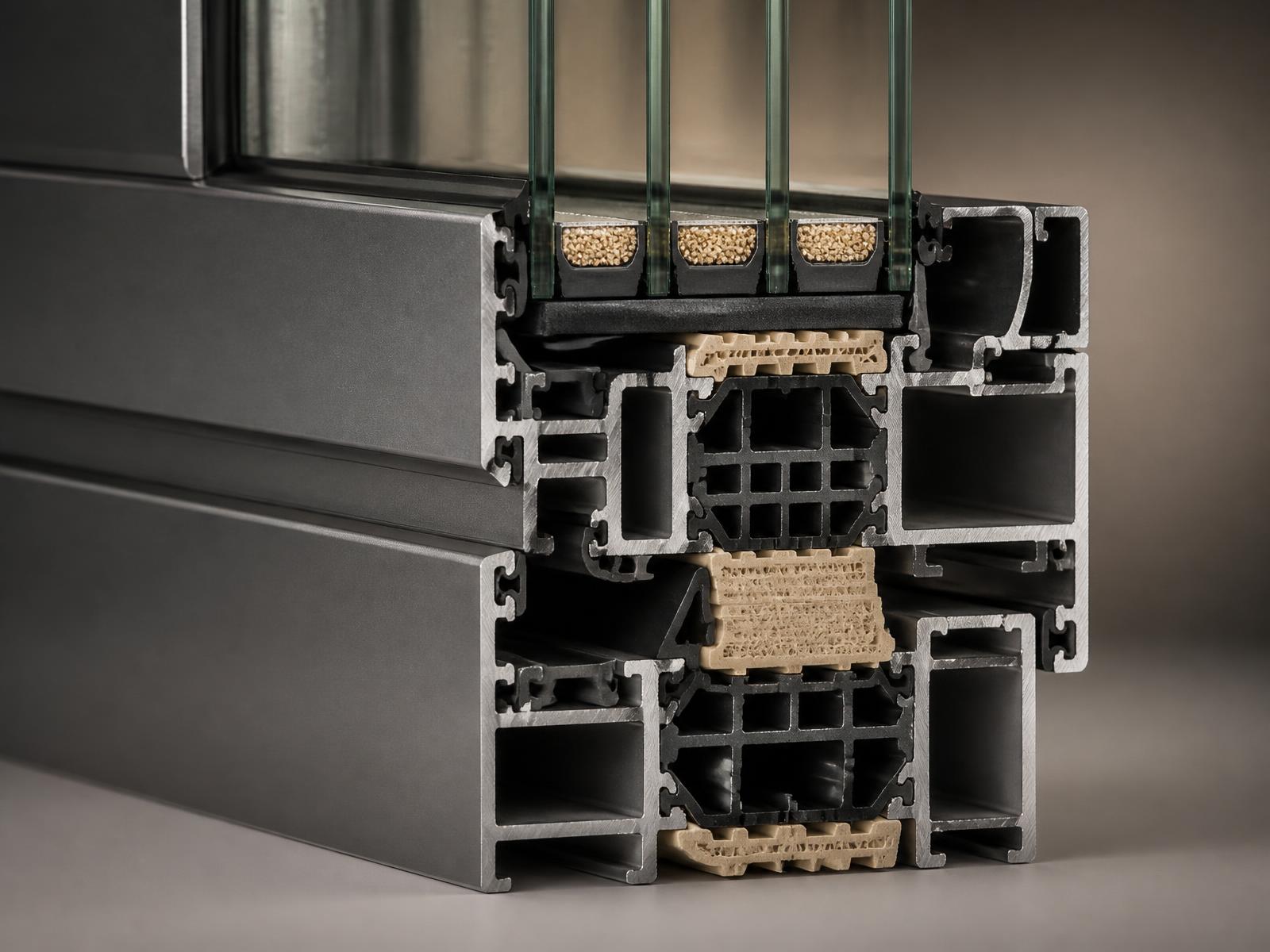
Since internal condensation is primarily a ventilation and humidity issue rather than a window fault, addressing it usually means improving background ventilation and moisture control rather than changing the glazing specification, though warm-edge spacer bars and well-insulated frames do help by keeping the coldest surfaces warmer.
Next step
We design, specify and install across Cumbria, the Lake District and the wider North. Send drawings, photographs or simply a description of the building and we will tell you what is possible and what it should cost.
Explore from here
Save anything you are drawn to. It gathers in My Inspiration and travels with your enquiry as a design brief.
Questions
If your question isn’t here, we would rather talk it through properly than guess.
Book a Design ConsultationVisit the Knowledge CentreKeep reading
Flagship guide · 7 min read
The single figure most quoted in glazing brochures, and the one most often misunderstood. Here is what a U-value actually measures, and what to do with it.
Technical Advice · 3 min read
A well-insulated window with poor seals will still feel draughty. Air permeability is the figure that describes how much air leaks through in real conditions.
Technical Advice · 4 min read
A thermal bridge is a localised weak point in the insulation of a building element, and window openings are one of the most common places they occur.
Installation · 3 min read
Guarantee paperwork can look dense, but the principles are straightforward. Here is what is usually covered, for how long, and what to check.
Build your own collection of expert advice as you plan your project.
Wondering how this applies to your own home?
Share a photograph and we’ll turn this guidance into recommendations for your property.
Ready to understand the likely investment?
Start your personalised Project Investment Guide and see comparable completed projects.
Begin
Bring us your drawings, your site photographs or simply an idea. We will tell you what is possible, what it should cost and how long it will take.