Product Comparisons · 3 min read
Aluminium vs Aluclad: Which Frame Suits Your Project
Two premium specifications that photograph similarly and behave differently. The choice comes down to sightline, internal material and where the money should sit.
Collections
Specification
Product Comparisons · Flagship guide
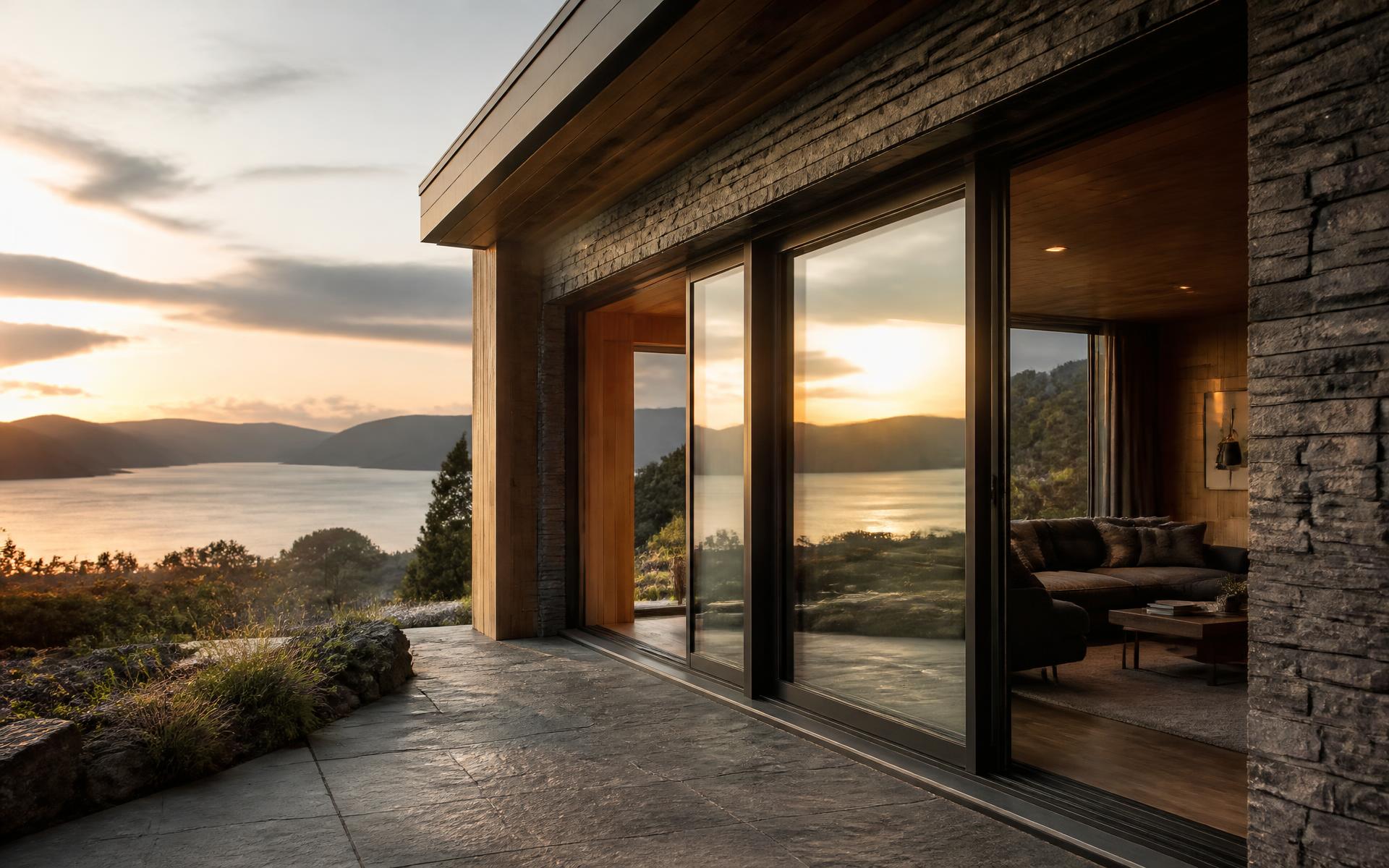
Aluclad is a solid engineered timber window wearing an aluminium coat. It is the standard specification across Scandinavia, and increasingly the answer for exposed British sites where timber is wanted but repainting is not.
Written by Windows in the Lakes · A trading name of Home Glazing Ltd
Every window is a compromise between the room and the weather. Timber is the material people want to see and touch from inside — deep, warm, quiet, and genuinely part of the joinery of a house. It is also the material that suffers most from horizontal rain that dries slowly and returns within the week, which is a reasonable description of the Cumbrian year.
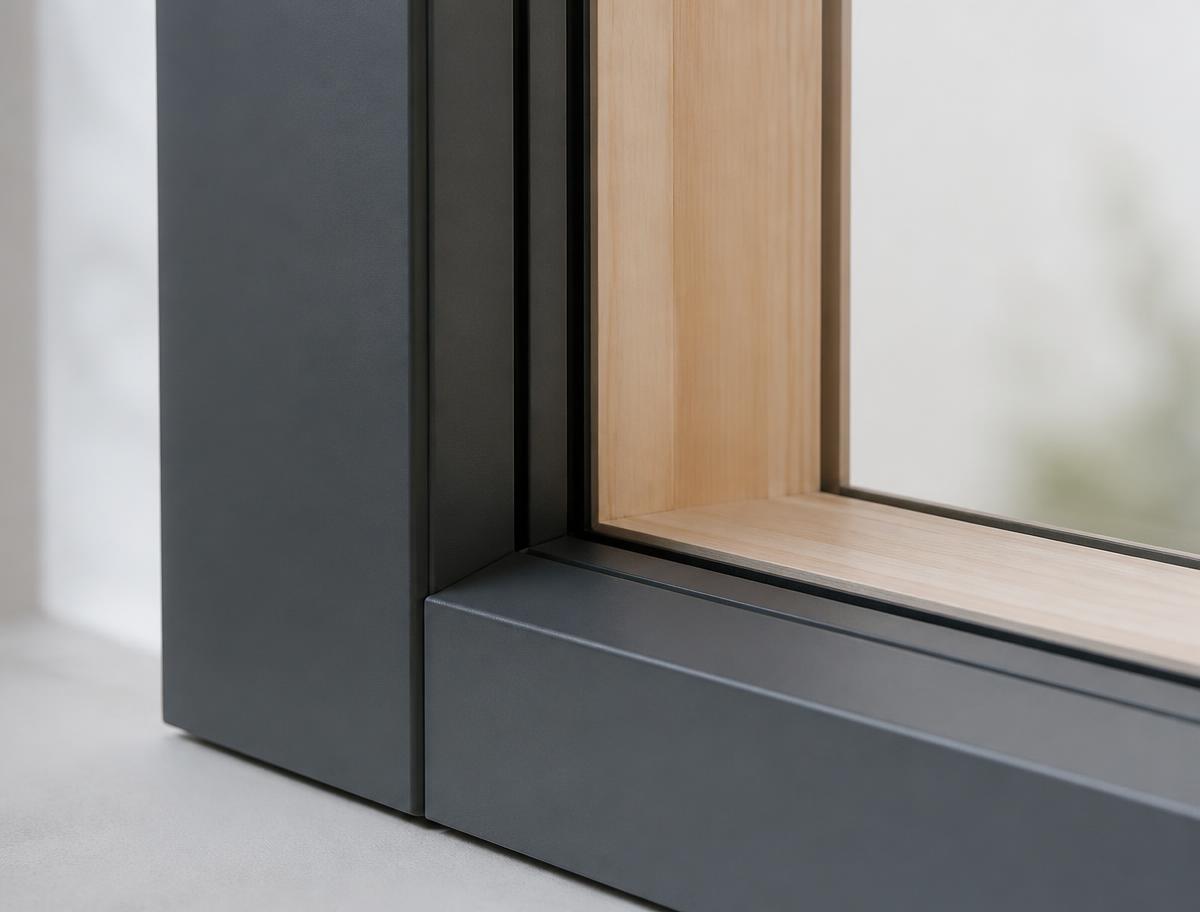
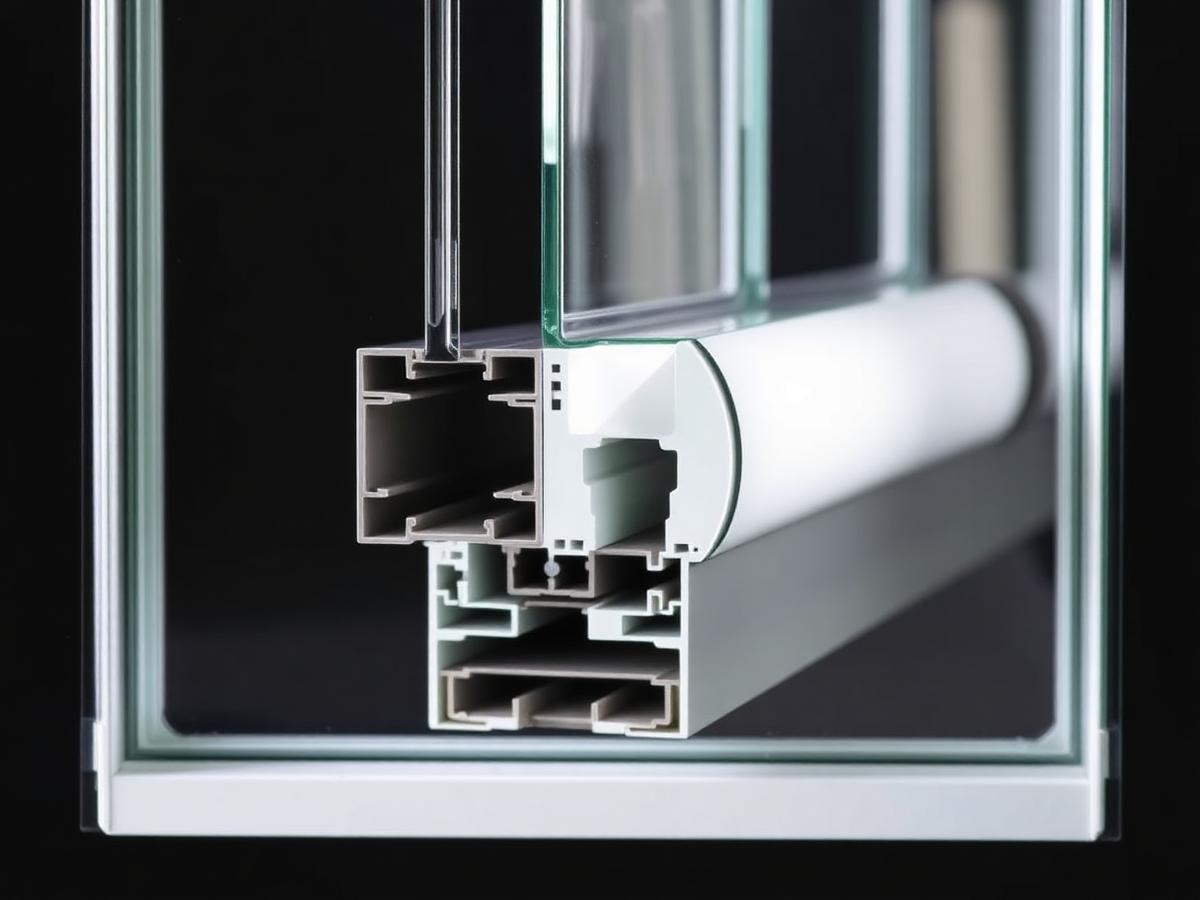
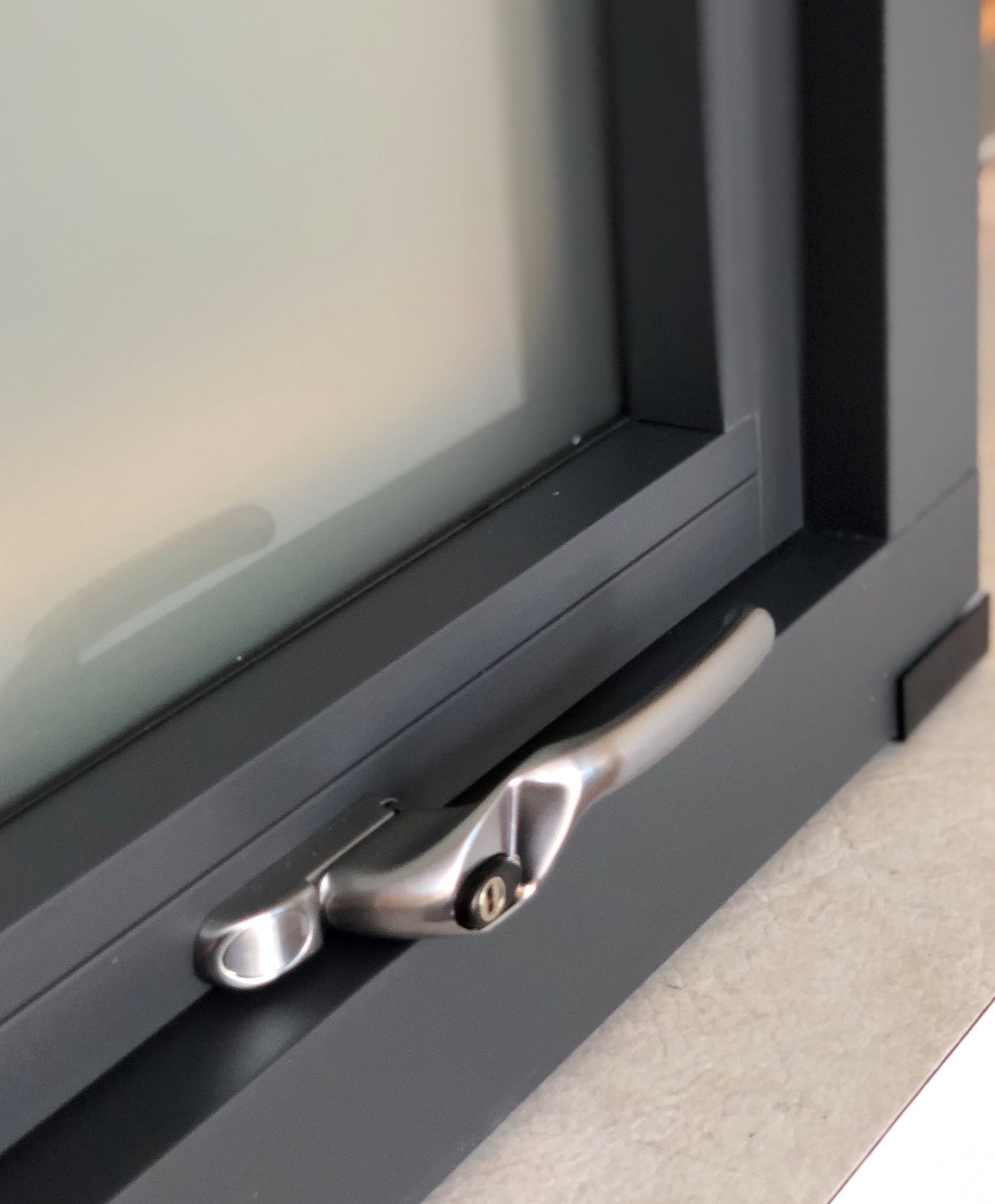
Aluclad construction removes that compromise rather than managing it. The structural frame is engineered timber, laminated for stability and finished for the room. Fixed to its external face is a powder-coated aluminium skin, held on clips so the two materials can move independently. What you see inside is wood; what the weather meets outside is coated aluminium.
This guide explains how the construction works, what it delivers in performance terms, how it compares with the alternatives, and — honestly — when it is not the right answer.
Start with the timber. The core is engineered Scandinavian softwood: knot-free laminations bonded so the grain directions oppose each other, which is why the section stays straight in a way solid timber does not. This is the structural frame — it carries the glass, it carries the hardware, and it does the majority of the insulating.
The aluminium is not structural. It is a thin, profiled, powder-coated skin that sits proud of the timber on clips, with a deliberate ventilated gap behind it. That gap matters more than anything else in the construction: it lets moisture escape rather than sit trapped against the wood, and it lets the aluminium expand and contract in the sun without dragging the timber with it.
Timber is a better insulator than aluminium by a wide margin, which is why an aluclad frame carrying triple glazing reaches whole-window figures a thermally broken aluminium system generally cannot. In practical terms, the frame is not the weak point of the wall.
| Product | Double glazed | Triple glazed |
|---|---|---|
| Window | From 1.2 W/m²K | From 0.8 W/m²K |
| Entrance door | From 1.2 W/m²K | From 1.0 W/m²K |
| French door set | From 1.3 W/m²K | From 1.1 W/m²K |
| Lift and slide door | From 1.3 W/m²K | From 1.1 W/m²K |
Security follows the same logic. A solid timber door leaf with a bonded aluminium skin is a substantial object; tested to PAS 24 with triple-point locking, it behaves accordingly. The difference is audible the first time the door closes.
The external face needs washing, in the same way any coated frame does — twice a year in a normal setting, more often close to a road or the coast. There is no repainting cycle, and the powder coating is the same technology used on architectural aluminium curtain walling.
Internally, the timber is factory finished. In a normal domestic environment it will need attention after many years rather than a few, and when it does, the work happens indoors, in the dry, on a face that has never been rained on. That is a fundamentally different proposition to standing on a ladder in October.
It is a premium specification and it should be spent where it shows. On a rear elevation with a tight budget, or where the internal reveal will be plastered up to the frame and barely seen, thermally broken aluminium or a good timber-look uPVC will serve the house better and free money for glass.
Aluclad timber sections are also deeper than an equivalent aluminium system. Where the brief is genuinely the slimmest possible sightline — a minimal-frame slider across a whole rear elevation — aluminium wins on that specific criterion and we will say so.
Next step
We design, specify and install across Cumbria, the Lake District and the wider North. Send drawings, photographs or simply a description of the building and we will tell you what is possible and what it should cost.
Explore from here
Save anything you are drawn to. It gathers in My Inspiration and travels with your enquiry as a design brief.
 Triple Glazing
 Low Iron Glass
Questions
If your question isn’t here, we would rather talk it through properly than guess.
Book a Design ConsultationVisit the Knowledge CentreKeep reading
Product Comparisons · 3 min read
Two premium specifications that photograph similarly and behave differently. The choice comes down to sightline, internal material and where the money should sit.
Buying Guides · 3 min read
On a self build the glazing decision is made twelve to eighteen months before anyone looks through the glass. Getting aluclad right is mostly about sequencing.
Flagship guide · 8 min read
Aluminium and modern timber-look uPVC are both good materials. The right choice depends on the age and style of your house, your budget, and how the frames will be used, not on which one is fashionable.
Flagship guide · 3 min read
Choose by building, not by material. Aluminium suits large openings and slim sightlines, timber suits period and high-end joinery contexts, and modern uPVC suits ordinary openings where value matters.
Build your own collection of expert advice as you plan your project.
Wondering how this applies to your own home?
Share a photograph and we’ll turn this guidance into recommendations for your property.
Ready to understand the likely investment?
Start your personalised Project Investment Guide and see comparable completed projects.
Begin
Bring us your drawings, your site photographs or simply an idea. We will tell you what is possible, what it should cost and how long it will take.