
Product Comparisons · 4 min read
Sliding Doors vs Bifold Doors
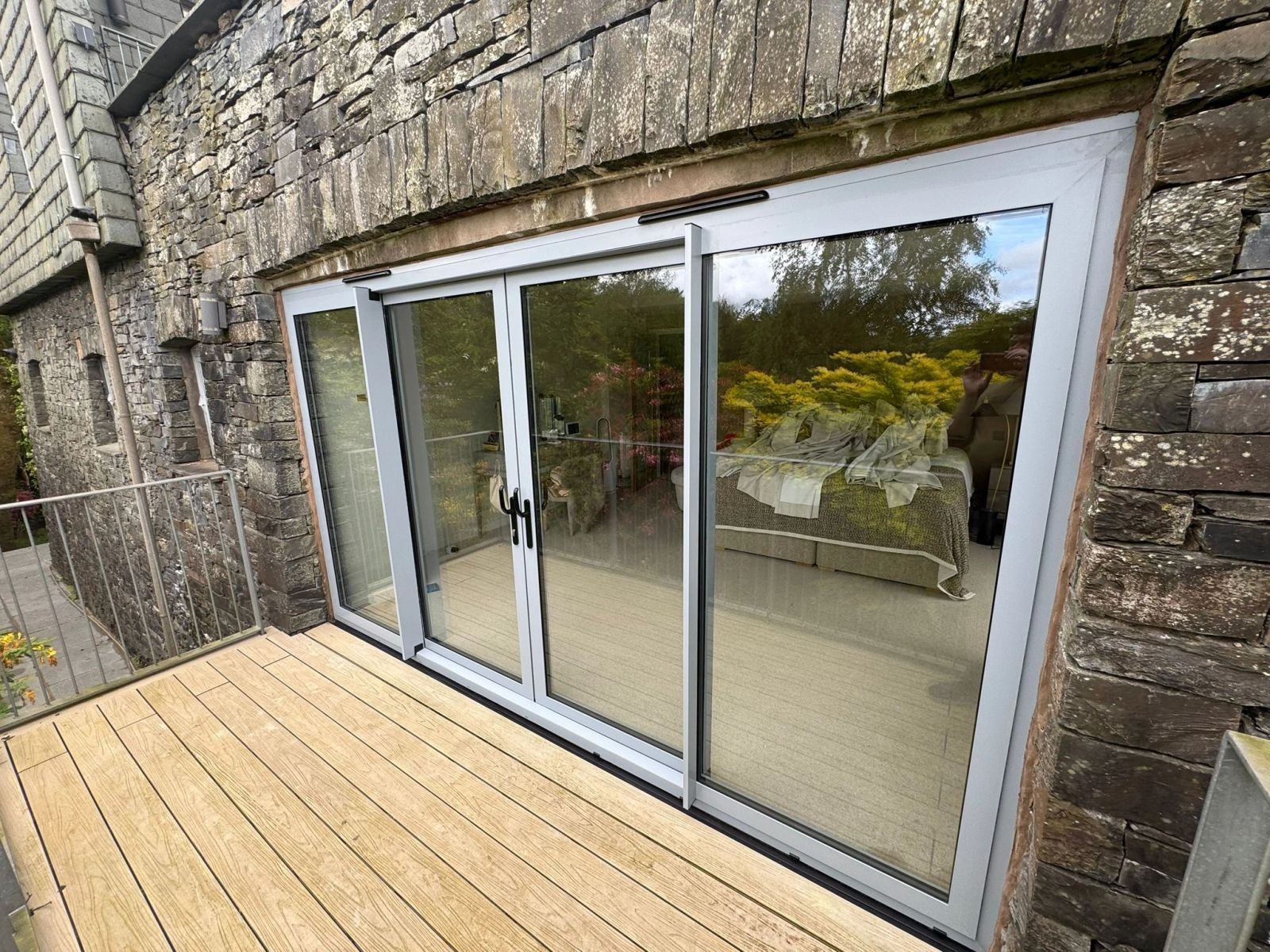
Sliding doors and bifold doors solve the same basic problem, a large glazed opening onto a garden, in two genuinely different ways. Neither is the automatically correct answer.
Collections
Specification
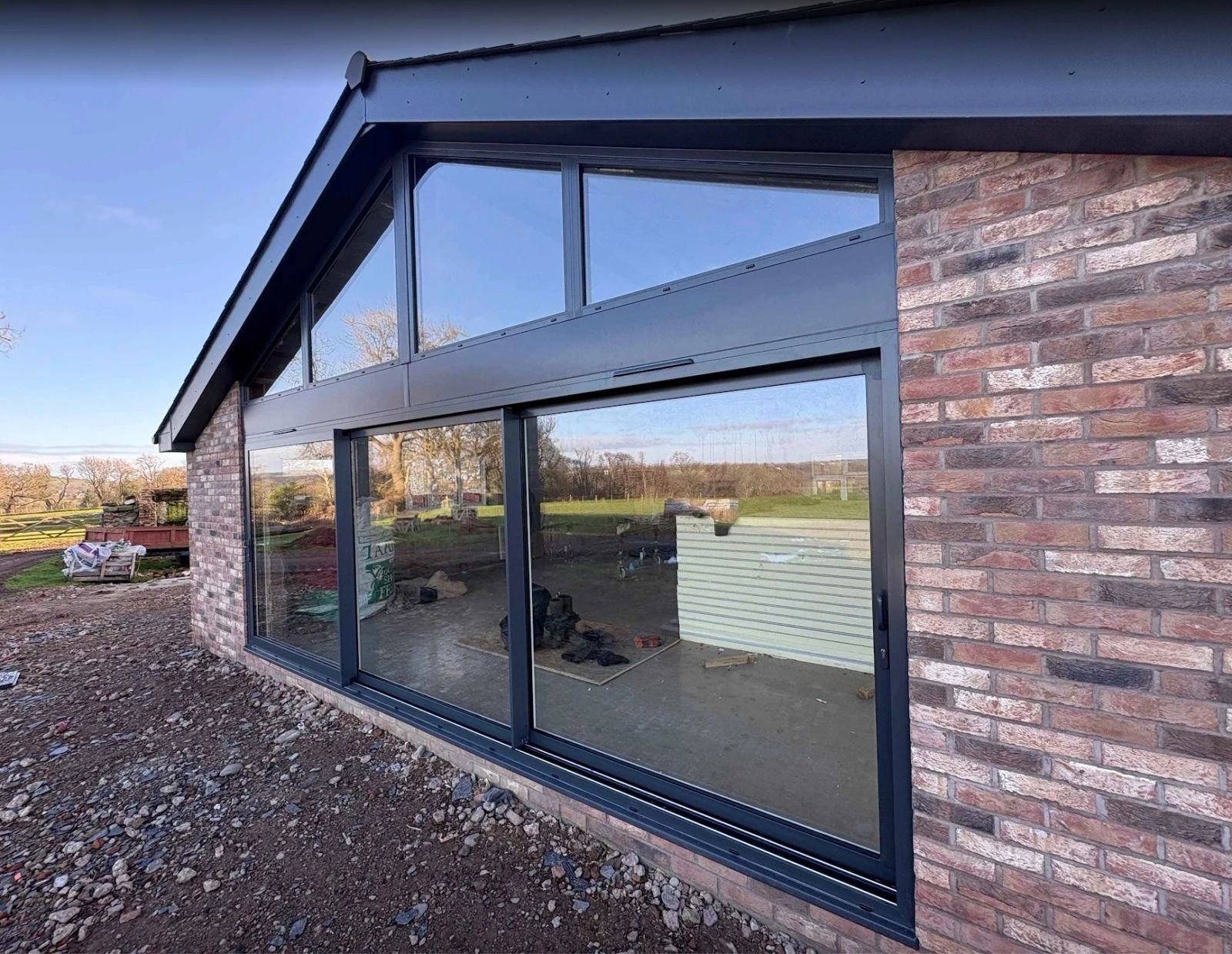
Both are sliding doors, but they use different mechanisms to carry the weight of the glass, and that difference decides how large you can go.
Written by Windows in the Lakes · A trading name of Home Glazing Ltd
Standard inline sliding doors and lift-and-slide doors look similar in a brochure photo, but the mechanism underneath is genuinely different, and it is the mechanism that decides whether your opening can be 3 metres or 8 metres wide. This comparison is really about scale: how big a pane of glass you want to move, and how often you intend to move it.
Inline (standard) sliding doors run on rollers within the track at all times, moving with a light sideways push. They are efficient and simple, but the panel size and weight they can support before becoming heavy to operate is limited.
Lift-and-slide doors use a handle mechanism that physically lifts the panel slightly off its seals before sliding, then lowers it back down to seal tightly when closed. This allows enormous, heavy panels, including panels weighing several hundred kilograms, to slide smoothly, because the panel is only in light rolling contact while actually moving.
| Inline sliding doors | Lift-and-slide doors | |
|---|---|---|
| Mechanism | Rollers run in track continuously | Panel lifts to slide, lowers to seal |
| Practical panel size | Up to around 3m x 2.5m per panel | Up to around 3.5m x 3m+ per panel |
| Effort to open | Light, single smooth motion | Slight lift action via handle, then smooth slide |
| Weathertight seal when closed | Very good | Excellent, panel compresses fully into seals |
| Typical cost | £6,000 - £20,000 depending on width | From £18,000, often £40,000+ |
| Best suited to | Standard to large domestic openings | Very large openings, architectural projects |
Lift-and-slide comes into its own on genuinely large openings, wide gable ends, architectural extensions, or anywhere the design calls for oversized panes with minimal visible frame. The lift action also gives a noticeably tighter seal when closed, which suits highly exposed sites where weather performance at scale matters.
It is a considered, premium specification, and the cost reflects both the engineering and the scale of glass typically installed alongside it.
For a standard 3-5m opening on a typical extension, a good-quality inline sliding door is entirely capable, more cost-effective, and easier to operate for daily use. Specifying lift-and-slide here adds considerable cost for a benefit you are unlikely to notice at that scale.
For openings beyond roughly 5-6m, exceptionally large single panes, or a genuinely architectural design brief, lift-and-slide is the right tool, and an inline slider at that scale would either need multiple tracks and more visible frame, or would struggle with the panel weight involved.
Next step
We design, specify and install across Cumbria, the Lake District and the wider North. Send drawings, photographs or simply a description of the building and we will tell you what is possible and what it should cost.
Explore from here
Save anything you are drawn to. It gathers in My Inspiration and travels with your enquiry as a design brief.
Questions
If your question isn’t here, we would rather talk it through properly than guess.
Book a Design ConsultationVisit the Knowledge CentreKeep reading
Product Comparisons · 4 min read
Sliding doors and bifold doors solve the same basic problem, a large glazed opening onto a garden, in two genuinely different ways. Neither is the automatically correct answer.
Flagship guide · 9 min read
How aluminium sliding doors work, what separates a good system from a poor one, and what to expect from specification through to installed cost.
Cost & Budget Guides · 3 min read
A standard 2-panel aluminium slider around 3m typically costs £6,000–£11,000 supplied and installed; slim-frame architectural systems start from around £18,000.
Technical Advice · 3 min read
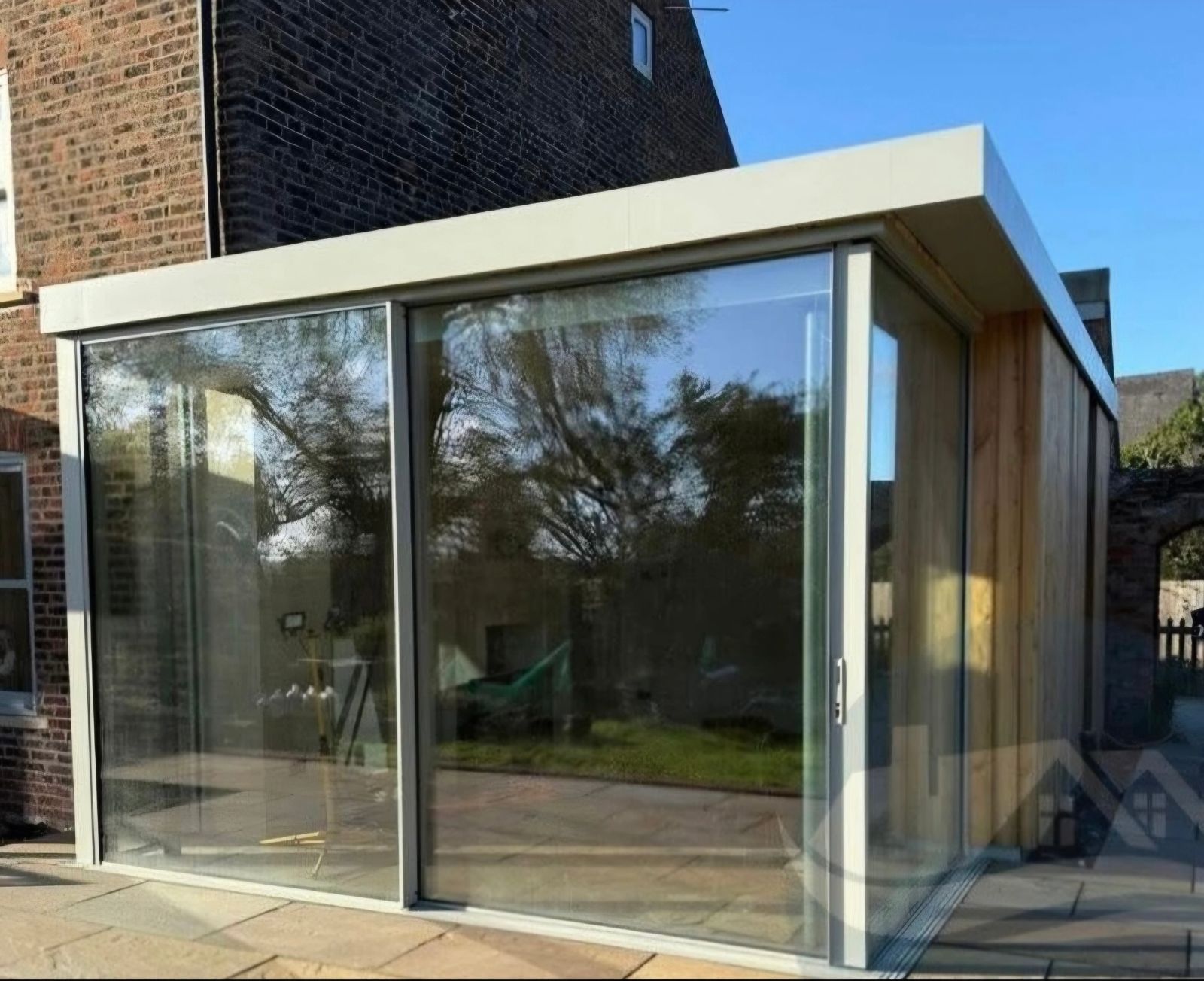
Slim sightlines on a large sliding door or frameless corner window are a structural engineering outcome, not just an aesthetic choice.
Build your own collection of expert advice as you plan your project.
Wondering how this applies to your own home?
Share a photograph and we’ll turn this guidance into recommendations for your property.
Ready to understand the likely investment?
Start your personalised Project Investment Guide and see comparable completed projects.
Begin
Bring us your drawings, your site photographs or simply an idea. We will tell you what is possible, what it should cost and how long it will take.