
Flagship guide · 9 min read
The Ultimate Guide to Sliding Doors
How aluminium sliding doors work, what separates a good system from a poor one, and what to expect from specification through to installed cost.
Collections
Specification
Sliding doors and bifold doors solve the same basic problem, a large glazed opening onto a garden, in two genuinely different ways. Neither is the automatically correct answer.
Written by Windows in the Lakes · A trading name of Home Glazing Ltd · Last reviewed 21 September 2026
Choose sliding doors where the view matters most and the opening is wide: sliding panels give fewer vertical frame divisions when closed and allow larger individual panes. Choose bifolds where you want most of the opening completely clear in warm weather and can accept more frame when closed, plus a stacked set of panels to one side. Opening width, how often the doors will actually be opened, the threshold detail and the room's furniture layout decide this more reliably than appearance alone.
This is one of the most common decisions on any extension or new-build project, and it tends to get decided by whichever door a homeowner has seen most recently on television rather than by how the room and garden actually work. Both are good products. The right one depends on how wide your opening is, whether you want an uninterrupted view when closed, and how you actually intend to use the space.
We fit both regularly across Cumbria, from Lake District barn conversions to contemporary new builds, and the deciding factors are consistent across almost every project.
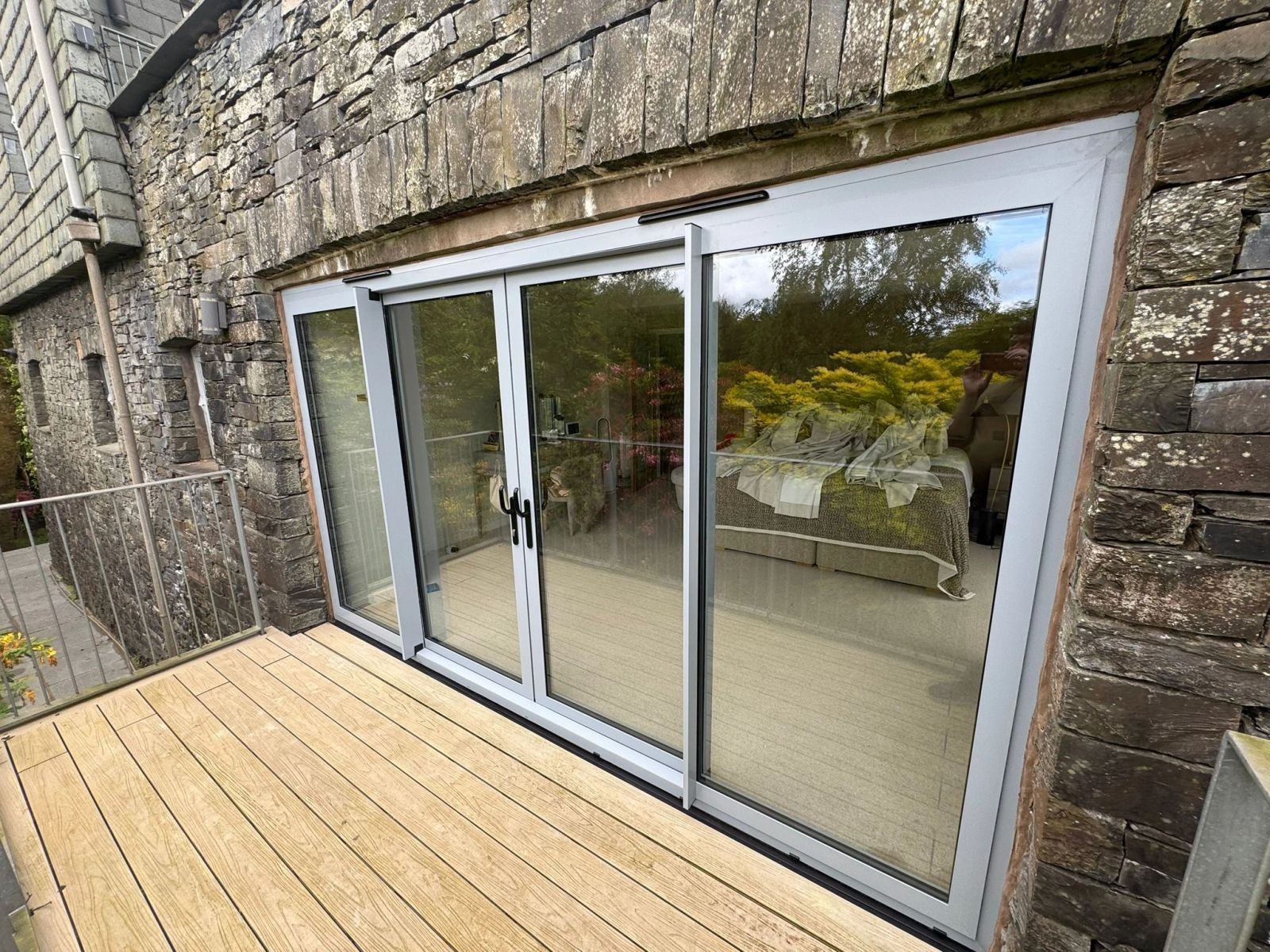
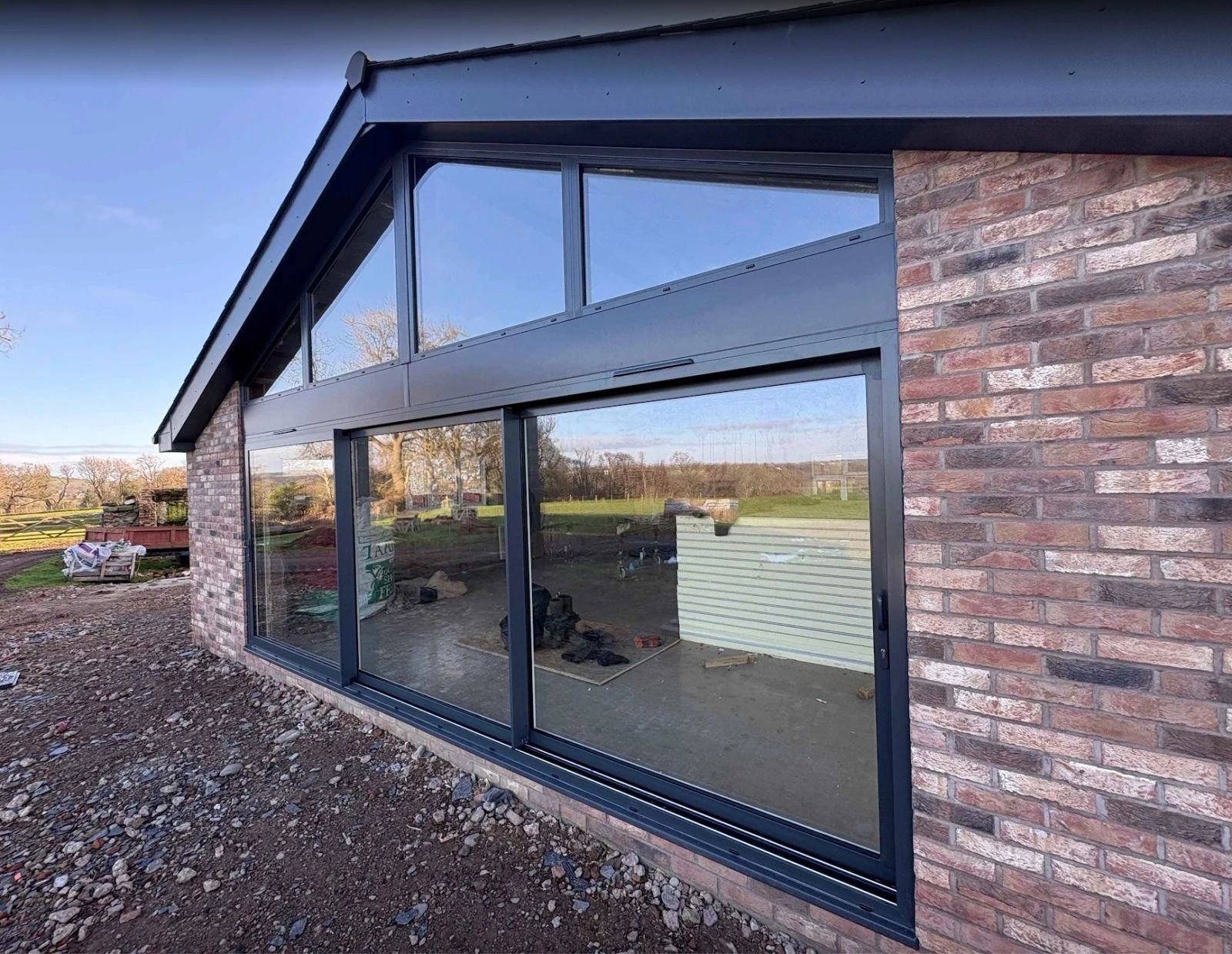
Sliding doors run large glass panels horizontally on a track, so at least one panel is always in view, giving the widest possible uninterrupted glass panes when closed. Bifold doors fold back concertina-style into a stack at one or both ends of the opening, so when fully open the opening is almost entirely clear.
| Sliding doors | Bifold doors | |
|---|---|---|
| View when closed | Largest possible uninterrupted panes | More frame lines visible per panel |
| Opening when fully open | Roughly 70-90% of the opening, one panel stays in the track | Up to around 90-95%, opening genuinely disappears |
| Typical width sweet spot | 3-6m and beyond | Up to around 5-6m before stacking becomes bulky |
| Daily use | Effortless single motion, ideal for frequent use | Multiple panels to fold each time, slower for quick access |
| Typical cost (3-panel, ~3m) | £6,000 - £11,000 | £7,000 - £12,000 |
| Best suited to | Wide openings, framing a view, everyday use | Fully opening a room to a garden or terrace |
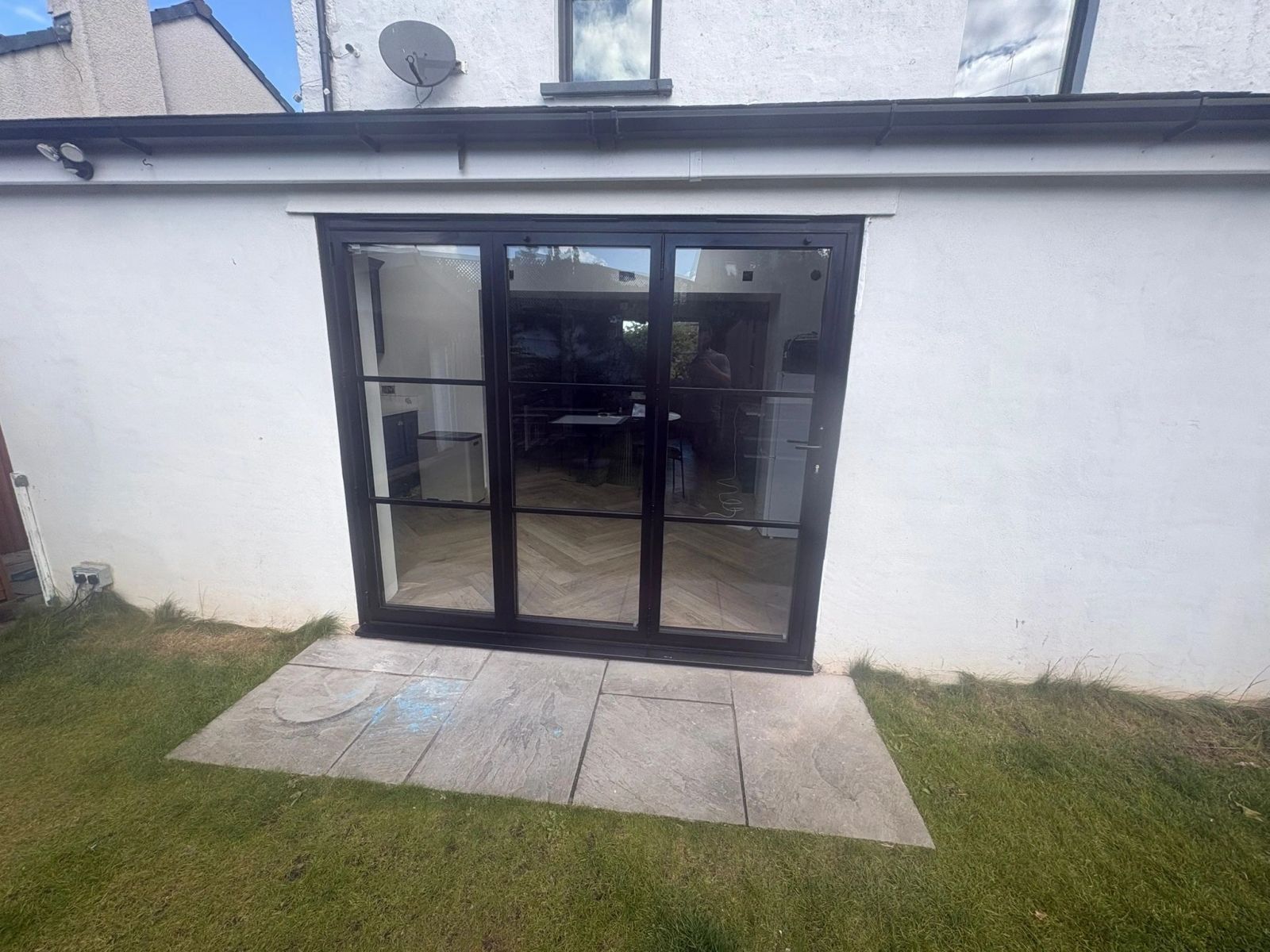
If you have a specific view worth framing, whether that is a fellside, a lake glimpse or a well-designed garden, sliding doors generally win, because the fixed and sliding panels use large single panes with minimal visible frame. Bifold doors, with a frame roughly every 700-1000mm across the opening, break up a static view even when they are closed.
If the priority is removing the boundary between inside and outside entirely on the occasions you use it, such as a summer gathering, bifolds do that better than any sliding door can. The trade-off is a busier appearance the other 90% of the year when the doors are shut.
Choose sliding doors if you have a view to frame, want the doors open and closed easily every single day, or your opening is wide, 4m and beyond, where bifold stacks start to look bulky and expensive relative to slider tracks.
Choose bifold doors if you genuinely want the wall to disappear for entertaining, your garden and room are designed around that fully-open moment, and you are less bothered by the busier appearance of the doors when shut.
Be honest about how often you will actually fold back six panels of bifold door on a wet Tuesday in November; for many households a slider gets used properly every day, while an ambitious bifold set gets opened a handful of times a year.
Next step
We design, specify and install across Cumbria, the Lake District and the wider North. Send drawings, photographs or simply a description of the building and we will tell you what is possible and what it should cost.
Explore from here
Save anything you are drawn to. It gathers in My Inspiration and travels with your enquiry as a design brief.
Questions
If your question isn’t here, we would rather talk it through properly than guess.
Book a Design ConsultationVisit the Knowledge CentreKeep reading
Flagship guide · 9 min read
How aluminium sliding doors work, what separates a good system from a poor one, and what to expect from specification through to installed cost.
Buying Guides · 3 min read
A practical guide to choosing bifold doors: configurations, tracks and thresholds, glass, and how they compare with sliding doors for cost and everyday use.
Product Comparisons · 3 min read
Both are sliding doors, but they use different mechanisms to carry the weight of the glass, and that difference decides how large you can go.
Cost & Budget Guides · 3 min read
A standard 2-panel aluminium slider around 3m typically costs £6,000–£11,000 supplied and installed; slim-frame architectural systems start from around £18,000.
Build your own collection of expert advice as you plan your project.
Wondering how this applies to your own home?
Share a photograph and we’ll turn this guidance into recommendations for your property.
Ready to understand the likely investment?
Start your personalised Project Investment Guide and see comparable completed projects.
Begin
Bring us your drawings, your site photographs or simply an idea. We will tell you what is possible, what it should cost and how long it will take.