Buying Guides · 7 min read
How to Choose the Best Window Company in Cumbria and the Lake District
The right window company is the one whose experience, specification and installation process fit the building — not the one making the broadest claim.
Neither business model is automatically better. The right choice depends on how standard or property-specific the work really is.
Written by Windows in the Lakes · A trading name of Home Glazing Ltd
A national window company may be the better choice for standardised replacement work, a familiar purchasing process, financing options or access to a broad service network. A specialist regional company may suit a design-led, unusual or locally sensitive project where continuity, direct communication, detailed survey and knowledge of regional buildings and exposure matter. Compare the actual specification, people and responsibilities rather than choosing on company size alone.
‘Local’ does not guarantee care, and ‘national’ does not mean impersonal. Both labels describe reach, not competence. The useful comparison is how each company will manage your particular building from advice to aftercare.
Those strengths can be valuable where openings are conventional, the product requirement is standard and the customer values a repeatable process. Scale may also provide appointment availability or financing structures a smaller specialist does not offer. Check the finance terms and total payable rather than treating availability of finance as evidence of product value.
These advantages are not automatic. Ask who will remain involved, which comparable projects exist and whether the quotation actually reflects the claimed level of detail.
| Consideration | What to establish |
|---|---|
| Advice | Is the recommendation tied to the property and brief? |
| Specification | Are system, glass, hardware and finishes named? |
| Survey | Who undertakes it and who owns final dimensions? |
| Installation | Who manages the work and remains accountable? |
| Changes | Can the same person or team resolve drawing and site changes? |
| Service | How are adjustments, claims and callbacks handled? |
| Price | Is scope equivalent after exclusions and finance cost are included? |
A national company may be a strong fit for a straightforward replacement project using mainstream configurations, particularly where a standard purchasing journey, broad appointment coverage or a specific finance option is a priority. If its written specification is clear, installation scope is complete and local delivery arrangements are credible, size need not be a disadvantage.
The lower-complexity the building and the more standard the desired product, the more useful a repeatable national process can become. Compare it fairly rather than assuming a specialist service is required.
A specialist regional company is more likely to add value when the design is unresolved, openings are large or irregular, the property is stone-built or exposed, the work must coordinate with a builder or architect, or consent affects appearance. Continuity also matters on whole-house projects where one decision changes several elevations.
For example, early coordination on the Eco Forest Lodges in Ravenstonedale allowed glazing sizes, sightlines, openings and cladding junctions to be resolved with the architect and builder before manufacture. That is a project-specific service rather than evidence that every local company is better than every national one.
On a standard replacement, a well-controlled handover between salesperson, surveyor and installer may be entirely effective. On a design-led project, information is more interconnected: moving a mullion can affect an elevation, changing a floor level can alter a threshold, and revising a glass size can change access and lifting. Ask how design decisions survive each handover.
Continuity does not require one person to perform every role. It requires one current record and clear accountability. Drawings, survey notes, approved colours, opening schedules and agreed exclusions should reach the people who manufacture and install the work.
Regional knowledge should appear as useful decisions, not as a claim to be ‘local’. In Cumbria and the Lake District that may mean recognising irregular stone reveals, exposed elevations, restricted rural access, National Park planning sensitivity or the sequencing of large glass on a constrained site. In North Lancashire, Central Lancashire or West Yorkshire the relevant building types and site conditions may be different.
Ask the company to connect its local experience to your specification: frame position, drainage, glass handling, finish or consent. Do not infer a branch, showroom or permanent team from a service-area claim. Physical presence and project experience are different facts.
A national call centre can provide extended hours and formal case tracking. A regional specialist may offer more direct access to people who know the installation. Either can work well. Ask how a service request is logged, who diagnoses whether it concerns adjustment, glass, hardware or building movement, and how manufacturer claims are coordinated.
The written answer is particularly important if the selling company, frame fabricator, glass manufacturer and installation team are different organisations. The customer should still know who takes the first responsibility for progressing a problem.
From a real Windows in the Lakes project
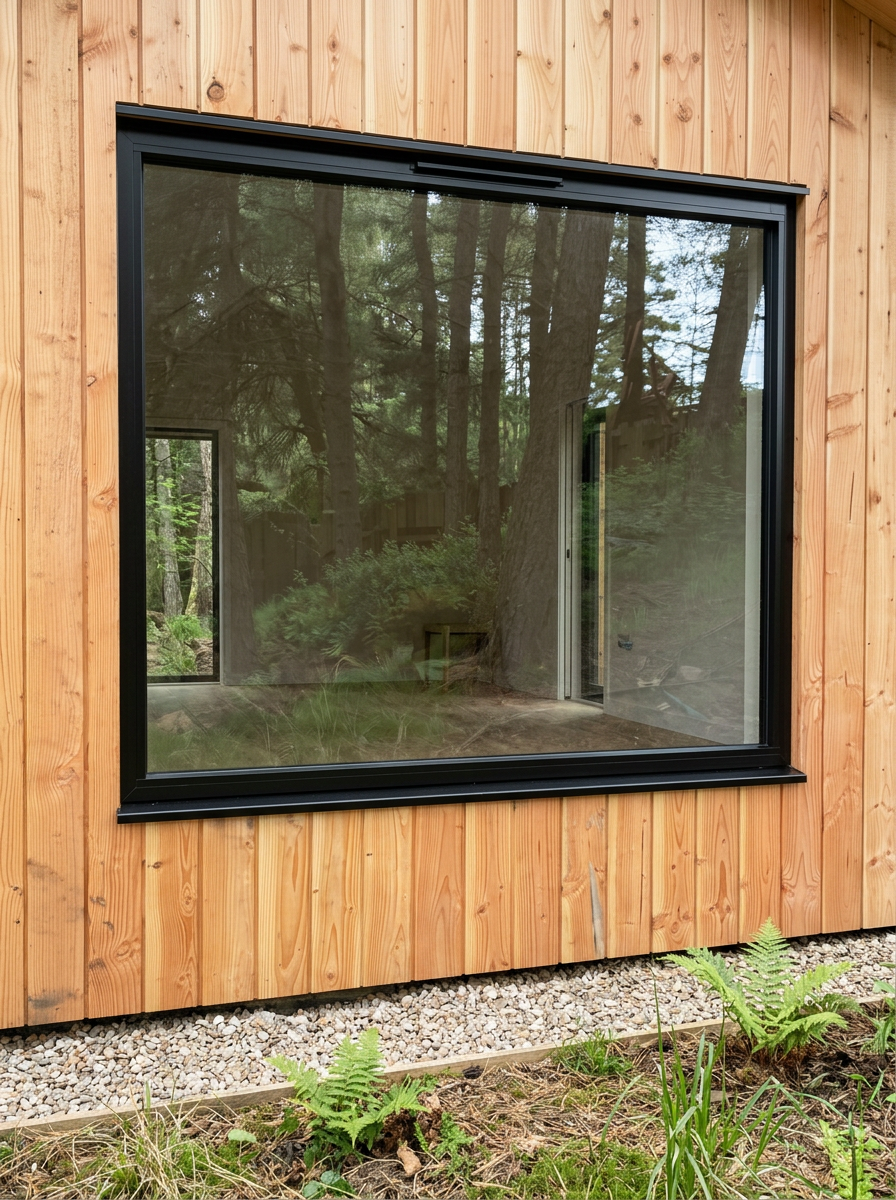
Ravenstonedale, Cumbria · Two luxury eco lodges · French door sets and picture windows
Two lodges in a woodland clearing, designed around their views, with large fixed picture windows and French door sets that had to be agreed before the timber frame was fabricated — leaving no room to adjust openings later, and no tolerance for frames that would interrupt the simple cladding rhythm.
Early design collaboration with the architect and builder: glazing sizes, sightlines and opening configurations set at drawing stage, structural openings agreed with the frame manufacturer, and installation details — perimeter trims, cladding junctions, thresholds — drawn before anything was ordered. Alunet aluminium was specified throughout for slim sightlines across large spans, in a single anthracite black finish inside and out.
Read the project storyNext step
We design, specify and install across Cumbria, the Lake District and the wider North. Send drawings, photographs or simply a description of the building and we will tell you what is possible and what it should cost.
Explore from here
Save anything you are drawn to. It gathers in My Inspiration and travels with your enquiry as a design brief.
Questions
If your question isn’t here, we would rather talk it through properly than guess.
Book a Design ConsultationVisit the Knowledge CentreKeep reading
Buying Guides · 7 min read
The right window company is the one whose experience, specification and installation process fit the building — not the one making the broadest claim.
Buying Guides · 6 min read
A clear answer before signature is far easier and less expensive than an assumption discovered during installation.
Installation · 8 min read
Two quotations for the same project can differ by thousands and both be honest — because they are rarely quoting the same thing.
Flagship guide · 8 min read
Aluminium and modern timber-look uPVC are both good materials. The right choice depends on the age and style of your house, your budget, and how the frames will be used, not on which one is fashionable.
Build your own collection of expert advice as you plan your project.
Wondering how this applies to your own home?
Share a photograph and we’ll turn this guidance into recommendations for your property.
Ready to understand the likely investment?
Start your personalised Project Investment Guide and see comparable completed projects.
Begin
Bring us your drawings, your site photographs or simply an idea. We will tell you what is possible, what it should cost and how long it will take.